
Filters




Which DC-DC unit fits your setup?
Charge a second or lithium battery from your alternator, or step a voltage up or down for equipment — the Victron Orion range, sorted by what it actually does.
Swipe the table sideways to see every column →
| Model | Type | Isolation | Output | Best for | From |
|---|---|---|---|---|---|
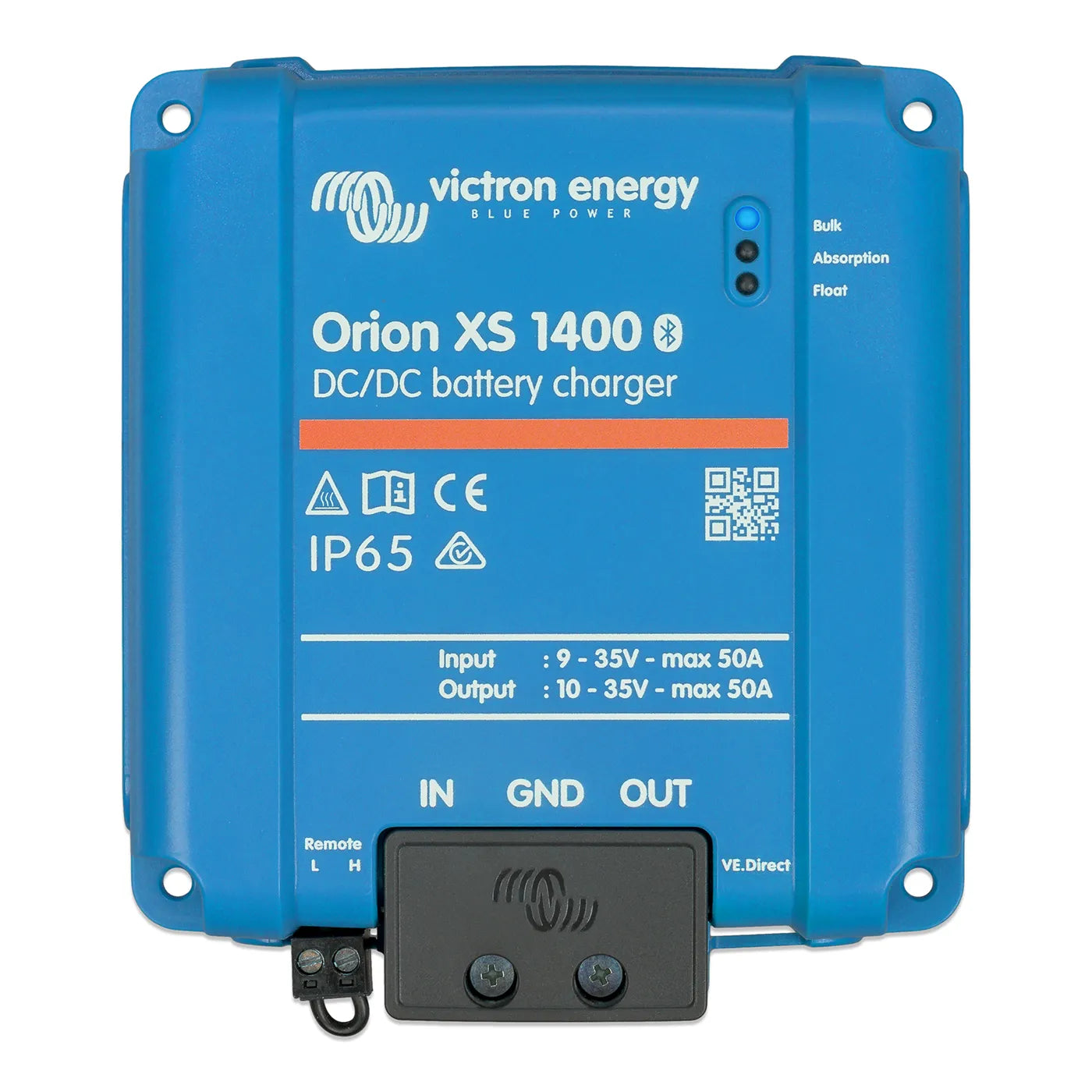
| Orion XS | DC-DC charger (smart) | Non-isolated | 12 / 24V, 50 / 70A | Fast alternator charging of a lithium aux bank | $328.10 USD |
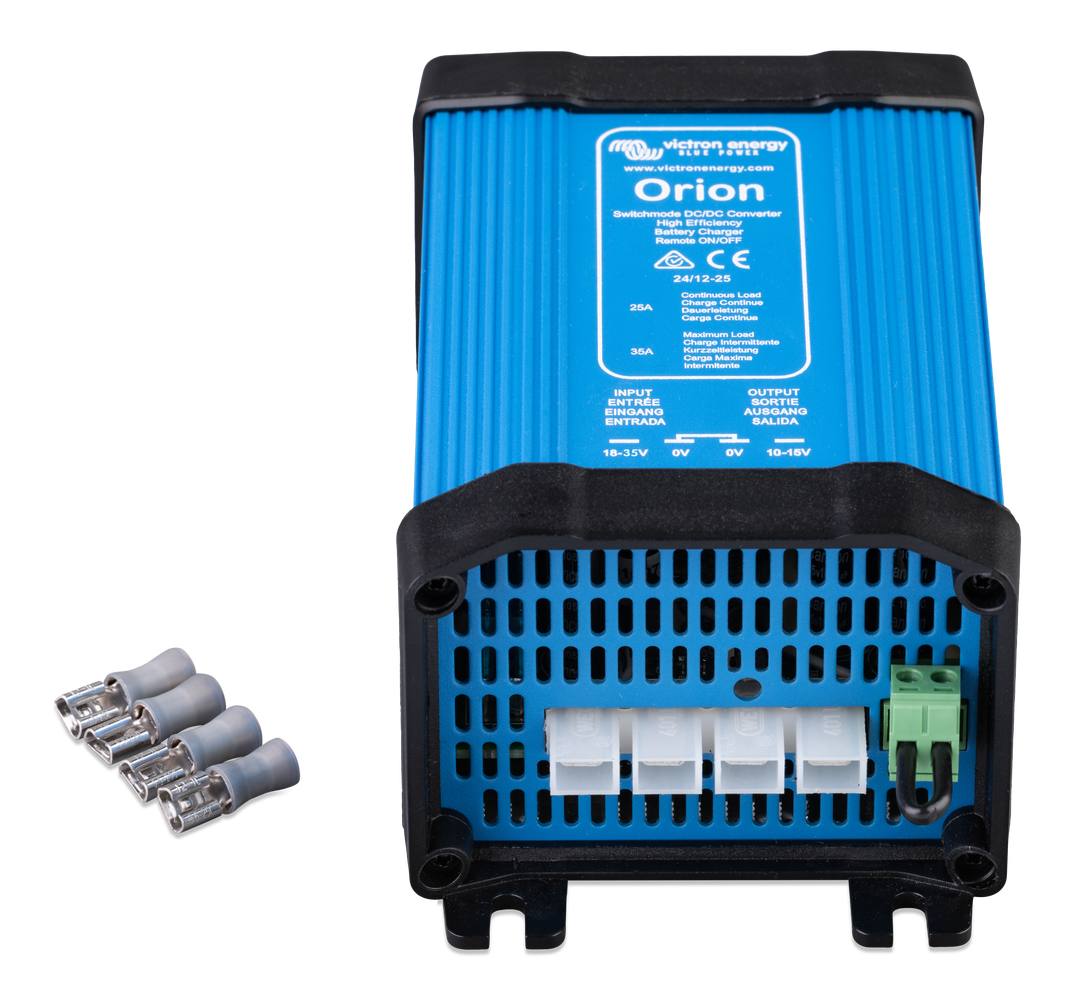
| Orion-Tr Smart (Isolated) | DC-DC charger (smart) | Isolated | 12/24/48V, to 30A | Alternator charging with electrical isolation | $129.95 USD |
| Orion-Tr Smart (Non-Isolated) | DC-DC charger (smart) | Non-isolated | 12/24V, to 30A | Alternator charging on a shared ground | $169.85 USD |
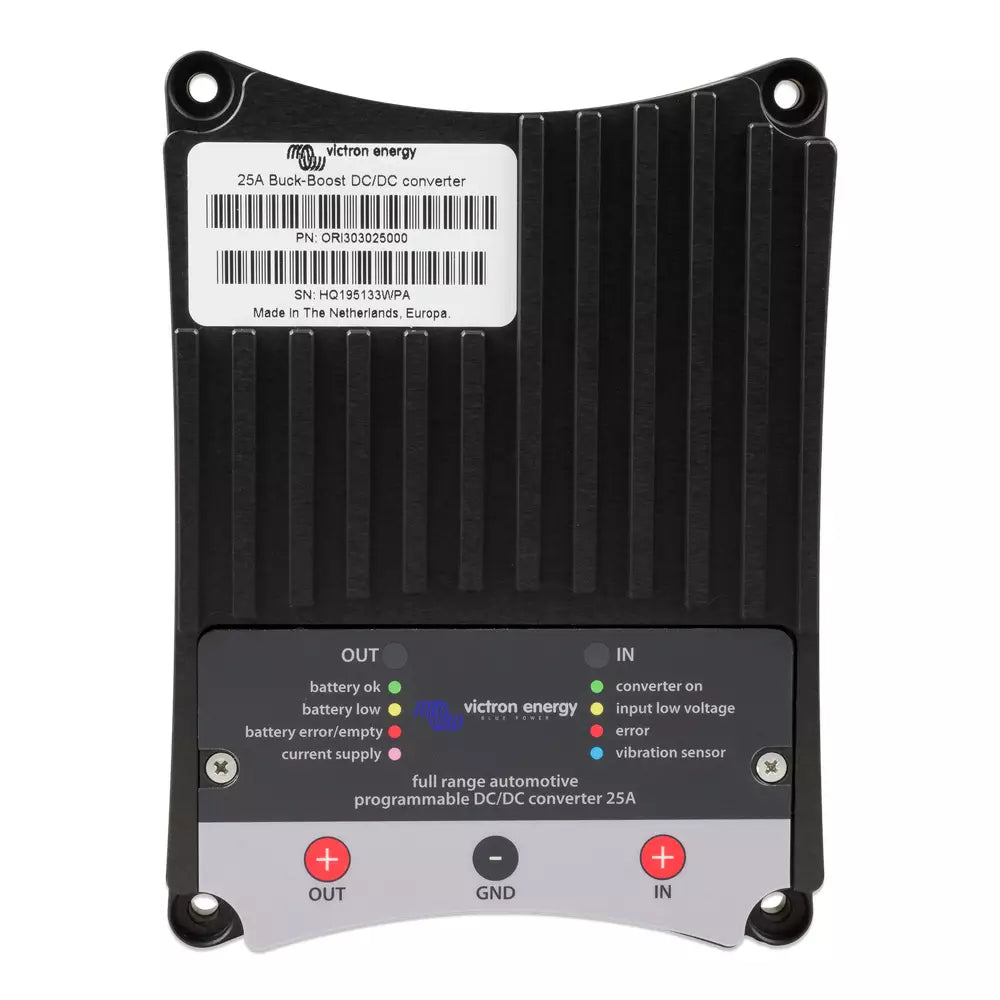
| Buck-Boost | DC-DC charger (variable) | Isolated | 25 / 50 / 100A | Smart / variable-voltage (Euro 6) alternators | $685.10 USD |
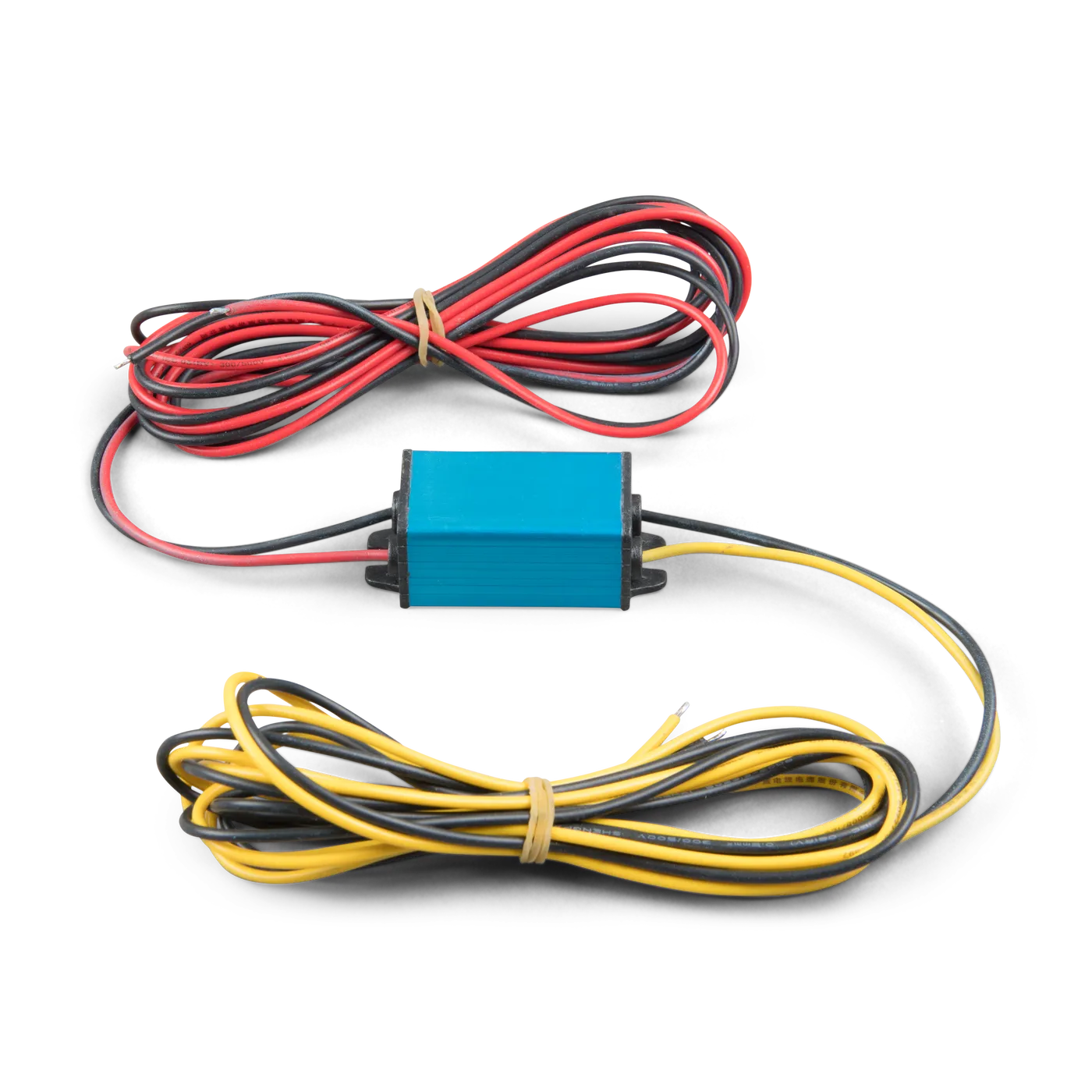
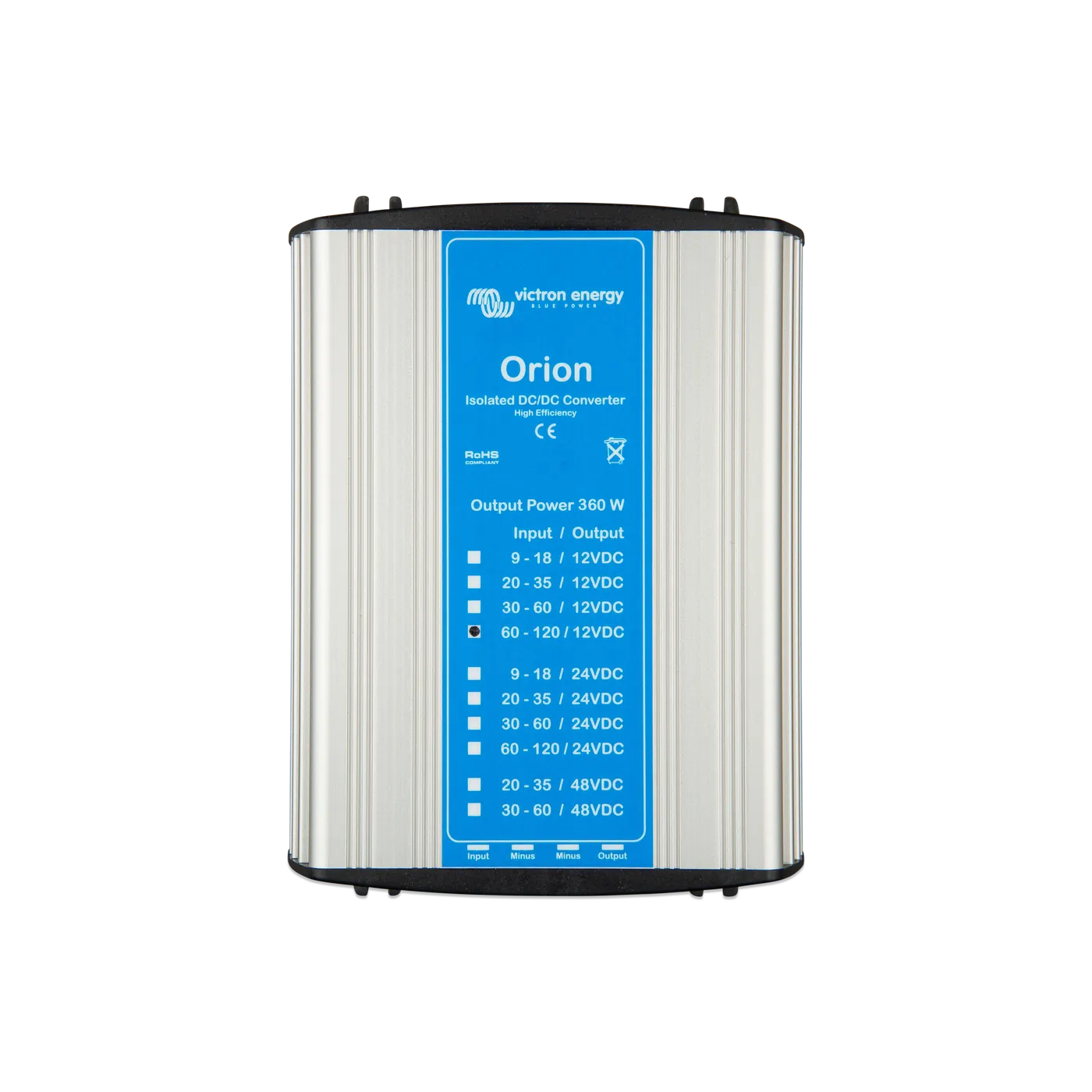
| Orion-Tr Isolated Converter | DC-DC converter | Isolated | 110–400W | Steady equipment voltage, isolated | $63.75 USD |
| Orion Non-Isolated (High-Power) | DC-DC converter | Non-isolated | to 80A | High-current step up/down for equipment | $53.55 USD |
| Orion IP67 Converter | DC-DC converter | Non-isolated | to 1200W, IP67 | Wet or exposed equipment power | $27.20 USD |
Charging from shore power instead? That's an AC battery charger. We also stock a compact 24→12V converter and a 110 VDC isolated converter — ask if you need either.
How to choose, in three questions
Charger or converter, isolated or not, and how many amps — answer these and you'll know what to buy.
Charging a battery, or powering equipment?
This is the big fork. A DC-DC charger (Orion XS, Orion-Tr Smart, Buck-Boost) properly charges a second or lithium battery from your engine/alternator with a real multi-stage profile. A DC-DC converter just holds a steady output voltage for gear — electronics, lights, a 12V fridge on a 24V boat — and is not meant to charge a battery.
Isolated or non-isolated?
Isolated units separate the input and output grounds — the safe choice when grounds differ, for noise-sensitive electronics, or where marine bonding calls for it. Non-isolated units share a common ground, cost less, and are fine for a typical common-ground system. When unsure on a boat, isolated is the conservative pick.
How many amps — and what kind of alternator?
Size the output amps to how fast you want to charge, but never beyond what your alternator can safely give. If you have a modern "smart" or variable-voltage (Euro 6) alternator that won't hold a steady voltage, the Buck-Boost is built for exactly that.
Why buy DC-DC from Blue Marine
True Blue Victron distributor
Warranty and setup support handled by us, not a ticket queue — and we know the Orion range cold.
ABYC-certified advisors
We size the charger, protect your alternator, and spec the battery-to-battery wiring and fusing as one system.
Free US shipping over $49
Fast shipping from Seattle and 60-day returns on non-lithium items.
Real people, real boats
Call (800) 628-6306 Mon–Sat — we wire alternator charging on real boats and rigs.
Charger or converter — not sure?
Tell us your batteries, your alternator, and what you're trying to power or charge — we'll spec the right Orion and the wiring around it.
DC-DC FAQ
DC-DC charger vs DC-DC converter — what's the difference?
A DC-DC charger charges a second battery from your engine, alternator, or another battery, using a proper multi-stage profile — essential for lithium. A DC-DC converter just steps a voltage up or down to power equipment at a steady output (say 12V gear on a 24V boat); it isn't designed to charge a battery.
Why do I need a DC-DC charger to charge lithium from my alternator?
Two reasons: it gives the lithium battery the correct charge profile it needs, and it limits the current drawn from your alternator so a hungry lithium bank doesn't cook it. Wiring a lithium house bank straight to the alternator risks both the battery and the alternator — a DC-DC charger (battery-to-battery) sits between them and manages it.
Isolated or non-isolated — which should I choose?
Isolated converters separate input and output grounds, which matters when the two sides don't share a ground, for sensitive electronics, or where marine practice calls for it. Non-isolated units share a ground, cost less, and are fine for common-ground systems. On a boat, isolated is the cautious default.
What's a Buck-Boost, and do I need one?
The Buck-Boost holds a steady charging output even as the input voltage swings — which is exactly what modern "smart" or variable-voltage (Euro 6) alternators do. If a standard DC-DC charger won't engage reliably because your alternator's voltage wanders, the Buck-Boost is the answer.
How many amps should I get?
Size the output to how fast you want to charge, then sanity-check it against your alternator: a small alternator can't feed a 50A charger all day without overheating. A common starting point is a 30A DC-DC charger on a typical engine; bigger alternators and banks justify 50–70A. We're glad to size it for your setup.
Does it only charge while the engine is running?
That's the usual setup — the smart Orion chargers can sense engine/alternator voltage (or use an engine-run signal) so they only pull power when the engine is charging, and stand down when it's off so they don't drain your start battery.
Orion XS or Orion-Tr Smart?
The Orion XS is the newest, most efficient Orion charger — compact, available in 12V and 24V at 50–70A, and ideal for alternator-to-lithium. The Orion-Tr Smart range covers more voltage combinations (12/24/48V) and offers an isolated option, so it's the pick when you need 48V, isolation, or lower current.