
Outfit boats, vans, or off-grid builds for a living? Van upfitters, RV shops, marine electricians, and solar installers get dealer pricing on Victron, Epoch & more. Get dealer pricing →
Stop galvanic corrosion at the dock
When you plug into shore power, the safety ground can carry tiny currents between your boat and everyone else's — quietly eating your metals. Here are the two ways to break that path.
Swipe the table sideways to see every column →
| Device | What it does | Best for | From |
|---|---|---|---|
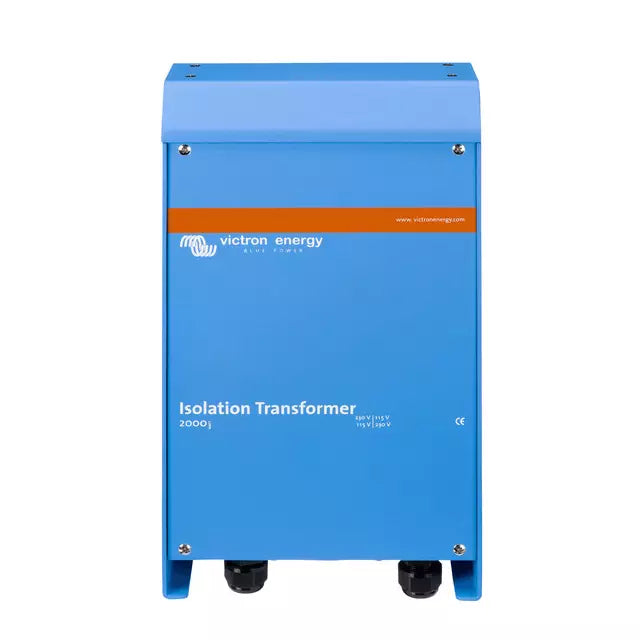
| Isolation Transformer | Fully isolates the boat from shore ground via a transformer; can also handle 120/240V differences | The most thorough protection, plus voltage flexibility | $397.80 |
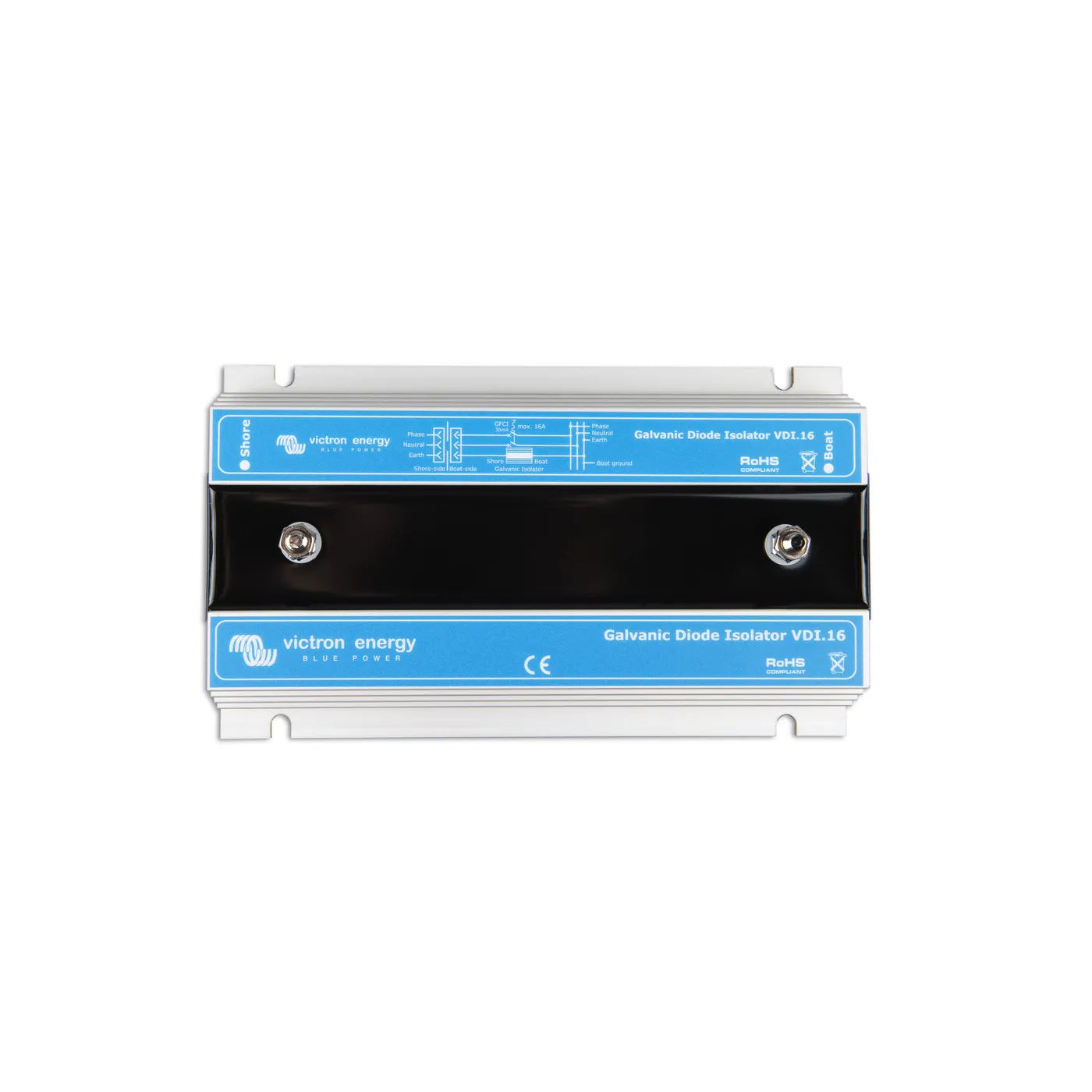
| Galvanic Isolator (VDI) | Blocks low-voltage galvanic DC on the shore ground wire while keeping the safety ground intact for faults | Simple, lower-cost corrosion protection | $109.65 |
Need to convert or balance 120/240V (not isolate)? That's an autotransformer. Both devices here sit on the AC shore-power side of your inverter/charger.
How to choose, in three questions
Why corrosion happens at the dock, which device suits you, and how to size a transformer.
Why does the dock cause corrosion?
Every boat on the dock shares the shore safety ground. Small voltage differences between vessels drive tiny galvanic currents through that ground wire and your underwater metals — props, shafts, through-hulls — slowly corroding them. Breaking or blocking that ground path stops it.
Isolation transformer or galvanic isolator?
A galvanic isolator is the simpler, lower-cost option — it blocks the low-voltage galvanic DC while still passing fault current for safety. An isolation transformer goes further: it physically isolates your boat's AC from shore through a transformer winding, and can bridge 120/240V differences. Bigger boats and the most thorough installs lean transformer.
How big a transformer?
Isolation transformers are rated in VA — here from 2000VA up to 7000VA. Match it to your shore connection and total AC load with some headroom. Tell us your shore service (e.g. 30A/120V or 50A) and we'll point you to the right size.
Why buy from Blue Marine
True Blue Victron distributor
Warranty and setup support handled by us, not a ticket queue.
ABYC-certified advisors
We help you choose and size shore-power isolation done to code.
Free US shipping over $49
Fast shipping from Seattle and 60-day returns on non-lithium items.
Real people, real boats
Call (800) 628-6306 Mon–Sat.
Protecting a boat at the dock?
Tell us your shore service and whether you're after simple corrosion protection or full isolation — we'll recommend the galvanic isolator or the right-size transformer.
Isolation FAQ
Galvanic isolator or isolation transformer — what's the difference?
A galvanic isolator sits in the shore ground wire and blocks the small galvanic DC voltages that cause corrosion, while still letting fault current through for safety. An isolation transformer breaks the connection entirely by transferring power magnetically through a transformer, giving complete galvanic isolation and the ability to handle voltage differences. The transformer is more thorough (and larger/heavier); the isolator is simpler and cheaper.
Do I really need one?
If you keep a boat on shore power, some form of galvanic protection is widely considered essential to protect your underwater metals and bonded hardware. Which one depends on your boat size, budget, and how thorough you want to be. Trailer boats that rarely plug in have less need than a liveaboard on a marina pedestal.
What size isolation transformer should I get?
They're rated in VA (2000–7000VA here). Match the rating to your shore service and total AC load with headroom — a small boat on 30A/120V needs far less than a yacht on 50A. Share your numbers and we'll size it.
Is an isolation transformer the same as an autotransformer?
No. An autotransformer balances and converts 120/240V but does not galvanically isolate you from shore. An isolation transformer's job is isolation (with some voltage flexibility as a bonus). Pick based on whether your goal is corrosion protection or voltage conversion.