
Outfit boats, vans, or off-grid builds for a living? Van upfitters, RV shops, marine electricians, and solar installers get dealer pricing on Victron, Epoch & more. Get dealer pricing →
Charge a second battery without draining the first
Combiners and isolators let one charging source — your alternator, shore charger or solar — top up a starter and a house bank while keeping them apart when you're not charging.
Swipe the table sideways to see every column →
| Device | Type | How it works | Best for | From |
|---|---|---|---|---|
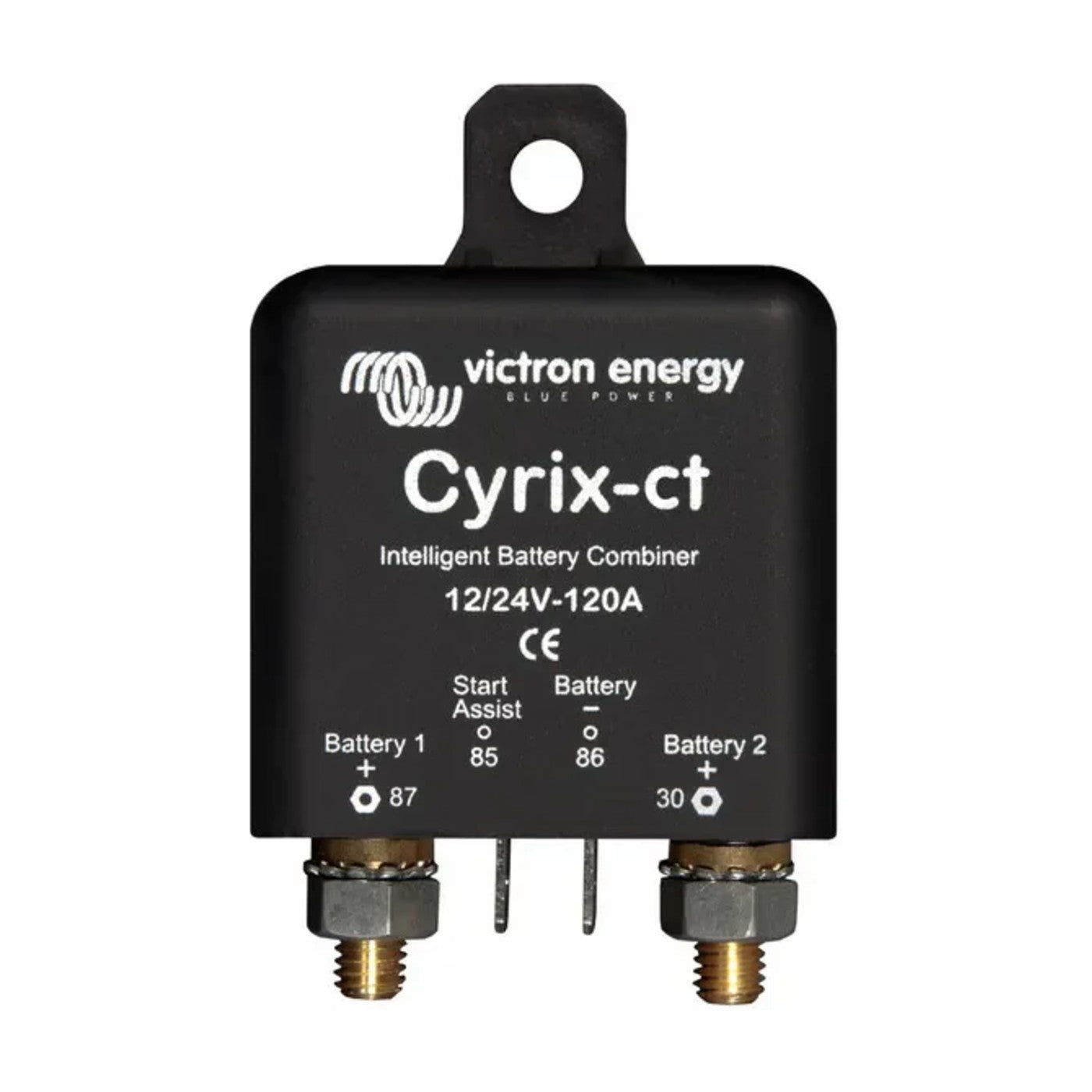
| Cyrix Combiner | Smart combiner (relay) | Senses charging voltage and links the banks, then separates them when charging stops | The popular auto-combine choice, incl. lithium versions | $49.30 |
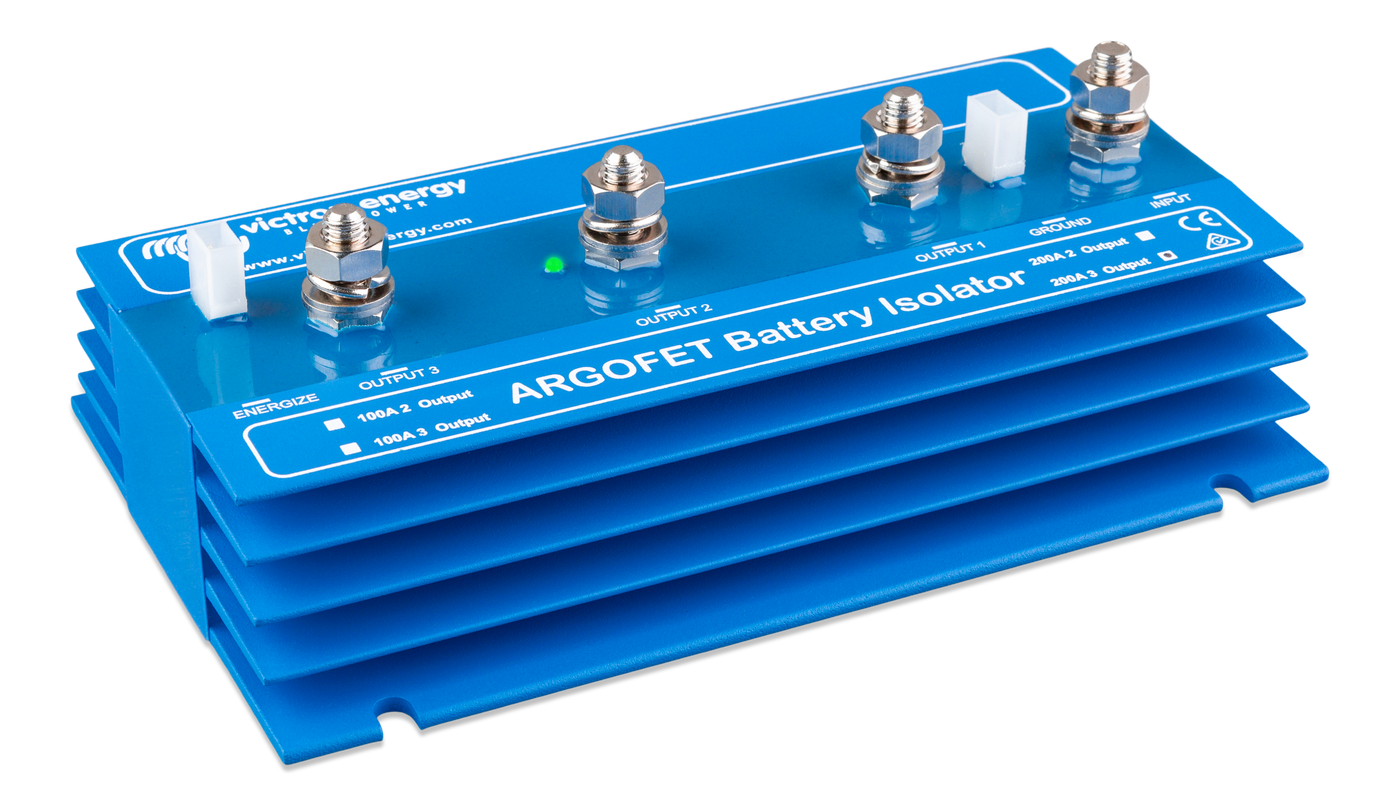
| Argofet | FET isolator | Splits one alternator/charger to 2–3 banks with almost no voltage drop | Splitting a charge source with minimal loss | $99.95 |
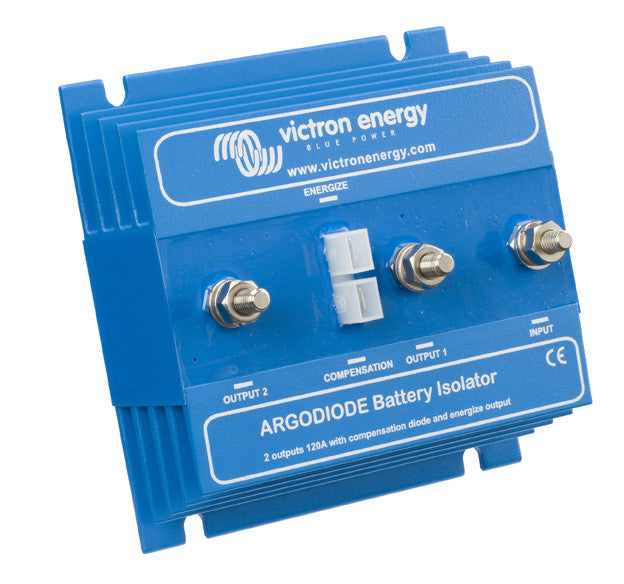
| Argodiode | Diode isolator | Diodes route charge to multiple banks and block reverse flow (small voltage drop) | Simple, rugged isolation where a small drop is OK | $39.10 |
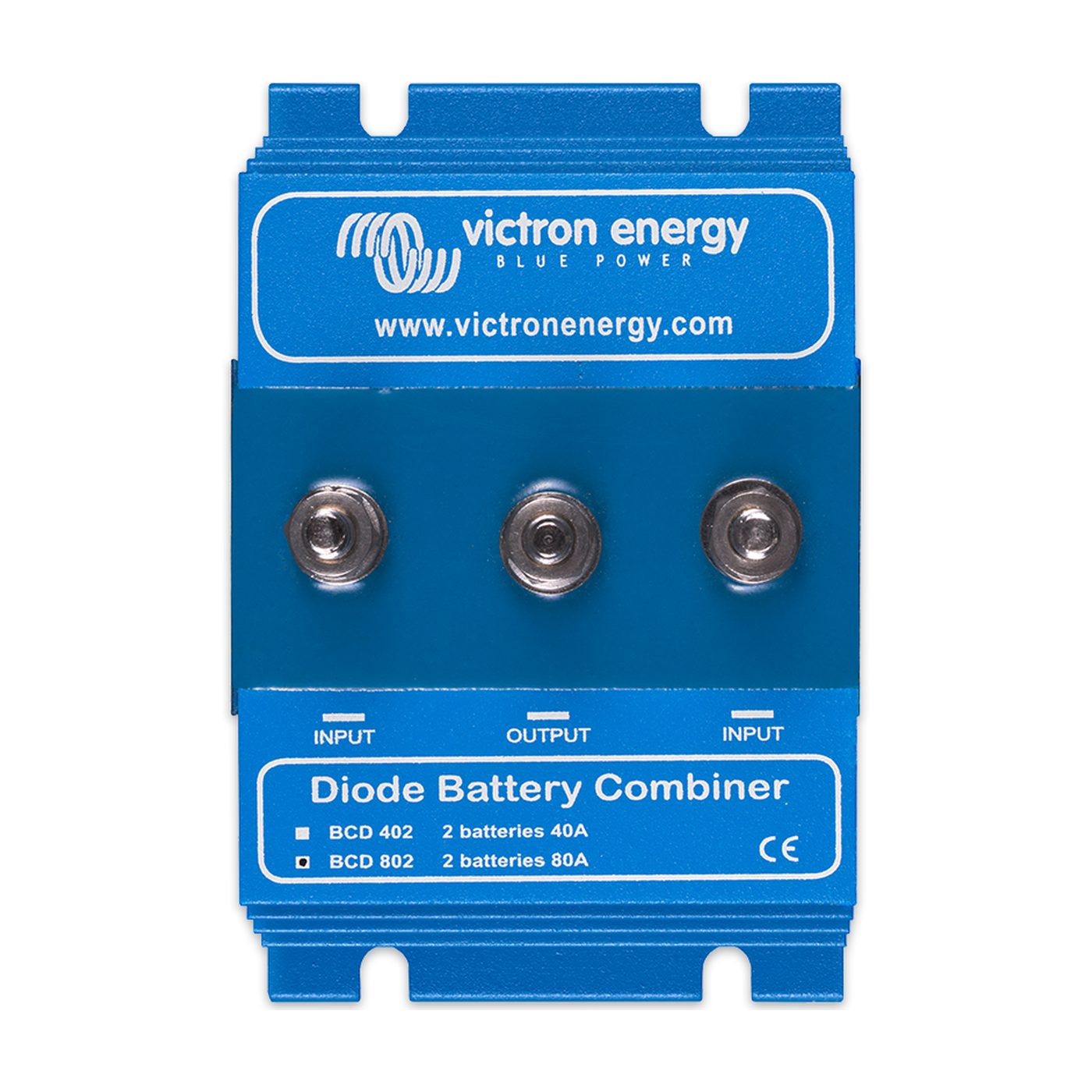
| BCD Combiner | Diode combiner | Compact diode-based combiner for two banks (BCD 402 / 802) | Small two-bank setups | $36.55 |
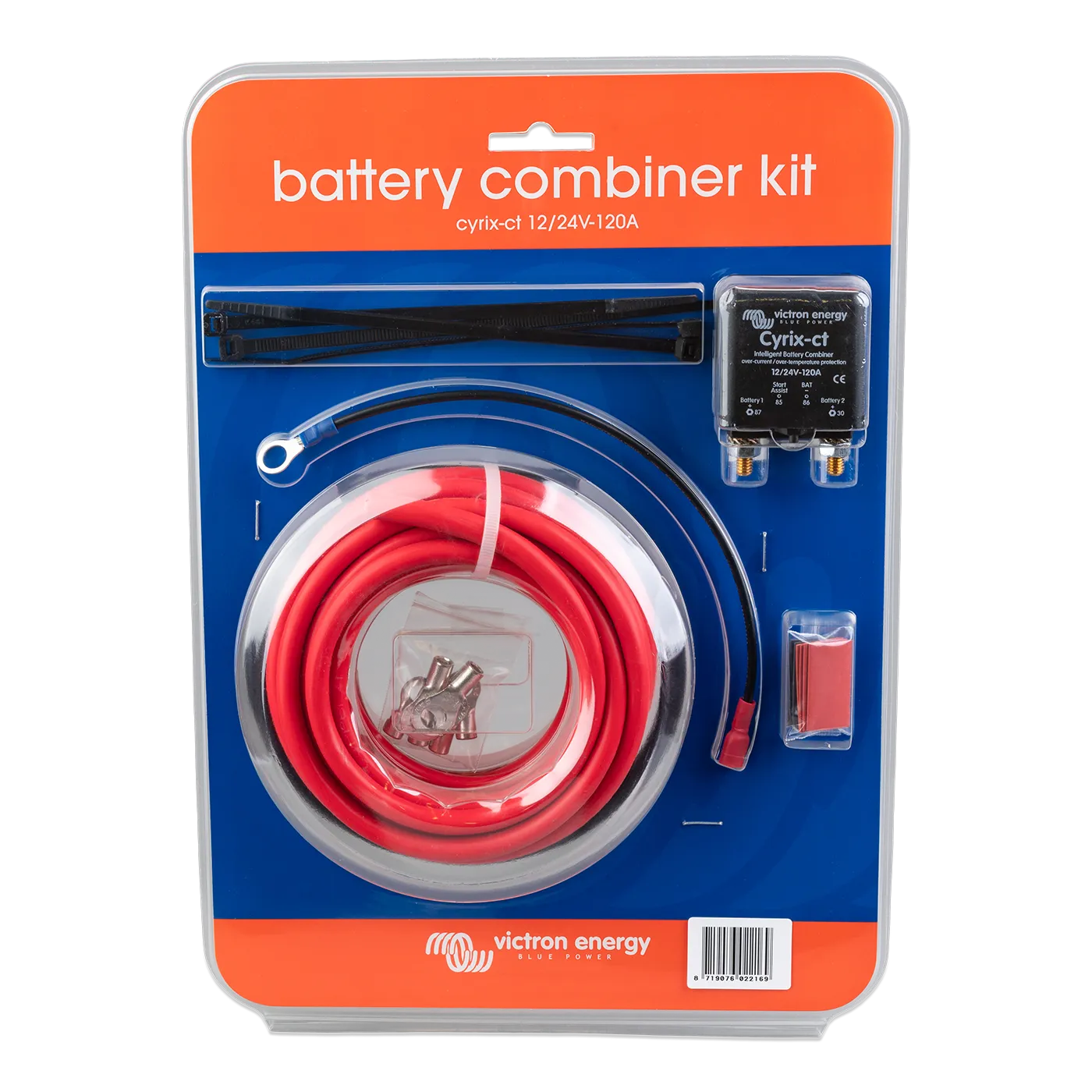
| Cyrix-ct 120A Kit | Combiner kit | Cyrix-ct 120A with cabling, ready to install | A complete grab-and-go combiner kit | $96.90 |
Charging lithium from an alternator, or want a true charge profile between banks? A DC-DC charger is often the better tool. Keep an eye on it all with a battery monitor.
How to choose, in three questions
Combiner or isolator, diode or FET, and what changes when there's lithium in the mix.
Combiner or isolator?
A combiner (Cyrix) watches voltage and automatically joins the banks while charging, then separates them so a flat house bank can't pull down your starter. An isolator (Argofet / Argodiode) permanently splits one charge source to several banks while blocking them from back-feeding each other.
Diode or FET?
Diode units (Argodiode, BCD) are simple and rugged but drop a little voltage, so the charge source sees a slightly lower battery voltage. FET isolators (Argofet) cut that drop to almost nothing, which helps batteries reach a full charge — handy with modern regulated alternators.
Is there lithium involved?
For LiFePO4, look at the Cyrix-Li versions, which are made to combine lithium safely. Often, though, the cleanest answer for charging lithium from an alternator or another bank is a DC-DC charger that delivers a proper lithium charge profile. Ask us and we'll point you the right way.
Why buy from Blue Marine
True Blue Victron distributor
Warranty and setup support handled by us, not a ticket queue.
ABYC-certified advisors
We help you pick combiner vs isolator vs DC-DC for your charge source and chemistry.
Free US shipping over $49
Fast shipping from Seattle and 60-day returns on non-lithium items.
Real people, real boats
Call (800) 628-6306 Mon–Sat.
Two banks, one charge source?
Tell us your charge source (alternator, shore charger, solar), your battery chemistries, and the amps involved — we'll tell you whether a combiner, isolator, or DC-DC charger is the right fit.
Isolators & combiners FAQ
What's the difference between a combiner and an isolator?
A combiner (like the Cyrix) is voltage-sensing: it automatically links two banks while a charge source is running and disconnects them when it stops, so your house loads can't flatten the starter battery. An isolator (Argofet or Argodiode) permanently splits one charge source to several banks and stops them from discharging into each other.
Diode or FET isolator?
Diode isolators are simple and tough but introduce a small voltage drop, so the alternator or charger sees a slightly lower voltage. FET isolators like the Argofet reduce that drop to nearly nothing, which helps batteries charge fully — especially useful with modern regulated alternators.
Will these work with lithium (LiFePO4)?
There are Cyrix-Li versions built specifically to combine lithium banks safely. That said, for charging lithium from an alternator or another battery, a DC-DC charger is often the better choice because it applies a correct lithium charge profile rather than just linking the banks. Tell us your setup and we'll advise.
Combiner or DC-DC charger — which do I need?
A combiner simply ties banks together when voltage rises, which is great for similar lead-acid/AGM banks. A DC-DC charger actively converts and regulates the charge, letting you charge a different chemistry or voltage properly and protect a modern alternator. Lithium house banks usually point toward DC-DC.
How many amps should it handle?
Match the device rating to your charge source's output — the Cyrix and Argo ranges run from roughly 80A up to 400A. Size with headroom over your alternator or charger output, and protect the wiring with appropriate fuses. We'll help you land on the right model.