Best Victron Products for a First-Time Boat Electrical Upgrade
Victron Energy makes dozens of products across battery monitoring, solar, inverters, chargers, DC-DC chargers, and system integration. For someone upgrading a boat’s electrical system for the first time, the catalog is overwhelming. There’s a logical order that makes every upgrade more effective than the last. Here’s the build sequence we walk first-time customers through, and the specific Victron products at each step.
Step 1: Know What You Have — Victron SmartShunt
Before you upgrade anything, you need to understand your current system. How full is your battery when you wake up in the morning? How much current are your loads actually drawing? The Victron SmartShunt is a battery monitor that connects inline on the negative cable between your battery and your loads. It counts current in and out of the battery and reports state of charge, voltage, current, power, and remaining runtime to the VictronConnect app on your phone over Bluetooth.
Cost: $80–120 depending on current rating. Monitoring tells you what your actual energy consumption pattern is before you spend money on additional capacity or charging. Many boats that think they need more batteries actually need better charging.
Step 2: Charge Properly — Victron Blue Smart IP65 or IP67 Charger
Most boats have an aging or undersized shore power charger. The Victron Blue Smart IP65 (damp locations) and IP67 (engine compartments, ignition-protected applications) are the right replacements.
Both connect to the VictronConnect app over Bluetooth for profile selection, real-time monitoring, and firmware updates. Both include deep discharge recovery, storage mode, and multi-chemistry support. A properly configured charger that actually reaches your battery’s correct charge voltage is the single biggest improvement most boats can make to their battery health.
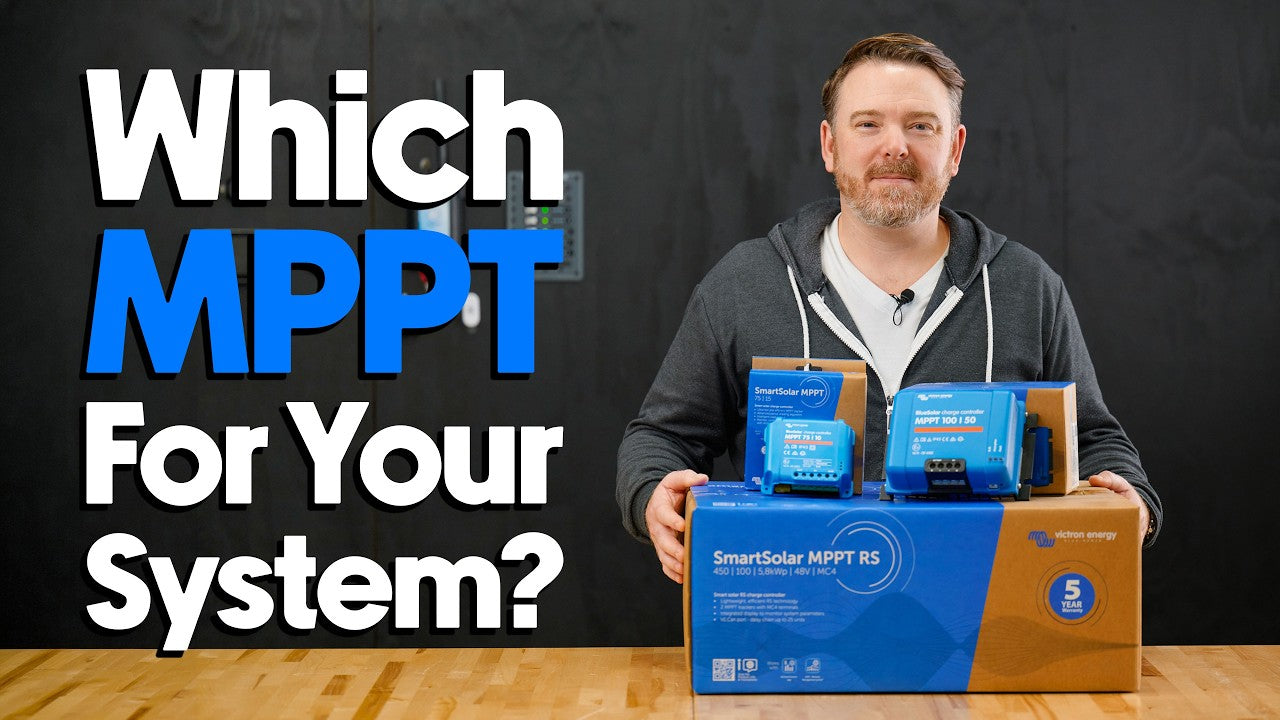
Step 3: Add Solar — Victron SmartSolar MPPT
The Victron SmartSolar MPPT charge controller handles up to 100V of panel input (on the 100-series), maximizes energy harvest via Maximum Power Point Tracking, and communicates with VictronConnect over Bluetooth. For most sailboats and small-to-mid cruisers, the 100/20 (20A output, 100V input) or 100/30 (30A output) covers one to four panels.
Solar’s value depends on knowing your consumption (Step 1). Without that baseline, you can’t size the array correctly and you can’t tell if it’s working.
Step 4: Add Inverting Capacity — Victron MultiPlus-II
The Victron MultiPlus-II is both an inverter and charger: it inverts DC to AC when off the dock, passes AC through and charges the battery when connected to shore power, and switches between modes in milliseconds. Available in 12V/3000VA through 48V/15000VA configurations.
This is the most significant investment in the Victron stack — and the one where proper sizing against your actual load profile matters most. Install it after you have monitoring and a handle on your energy budget.
Step 5: Integrate Everything — Cerbo GX
The Victron Cerbo GX ties everything together. It aggregates data from all connected Victron devices and sends everything to the Victron Remote Monitoring (VRM) portal, accessible from any browser or phone anywhere in the world.
The Cerbo also enables DVCC, which lets a lithium battery’s BMS communicate its current charge limits to every charger in the system simultaneously. The Cerbo’s value scales with the number of Victron components it’s integrating — four devices connected gives you total system visibility, remote monitoring, alarm notifications, historical data, and coordinated charging in a single pane of glass.
Browse Blue Marine’s battery monitoring, battery charger, and solar charge controller collections, and the full inverter/charger lineup. New to Victron entirely? See our plain-English Victron guide. Ready to plan a full system? Schedule a free consultation with our ABYC-certified team.
Related reading:
What is Victron Energy? A Plain-English Guide for New Buyers
Victron MultiPlus-II Sizing Guide: Which Model Do You Need?
Victron SmartShunt Setup & Overview: Bluetooth Battery Monitoring