
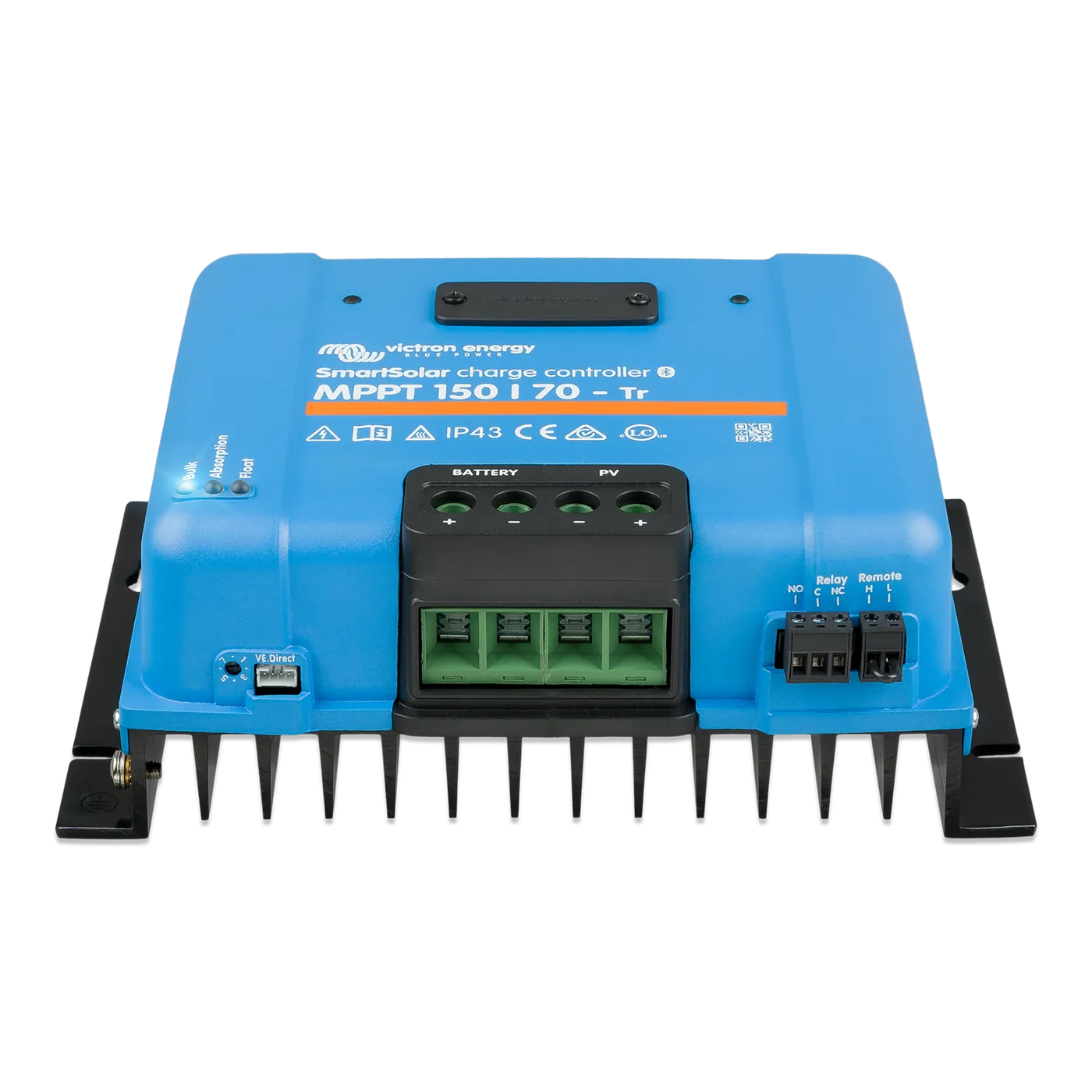
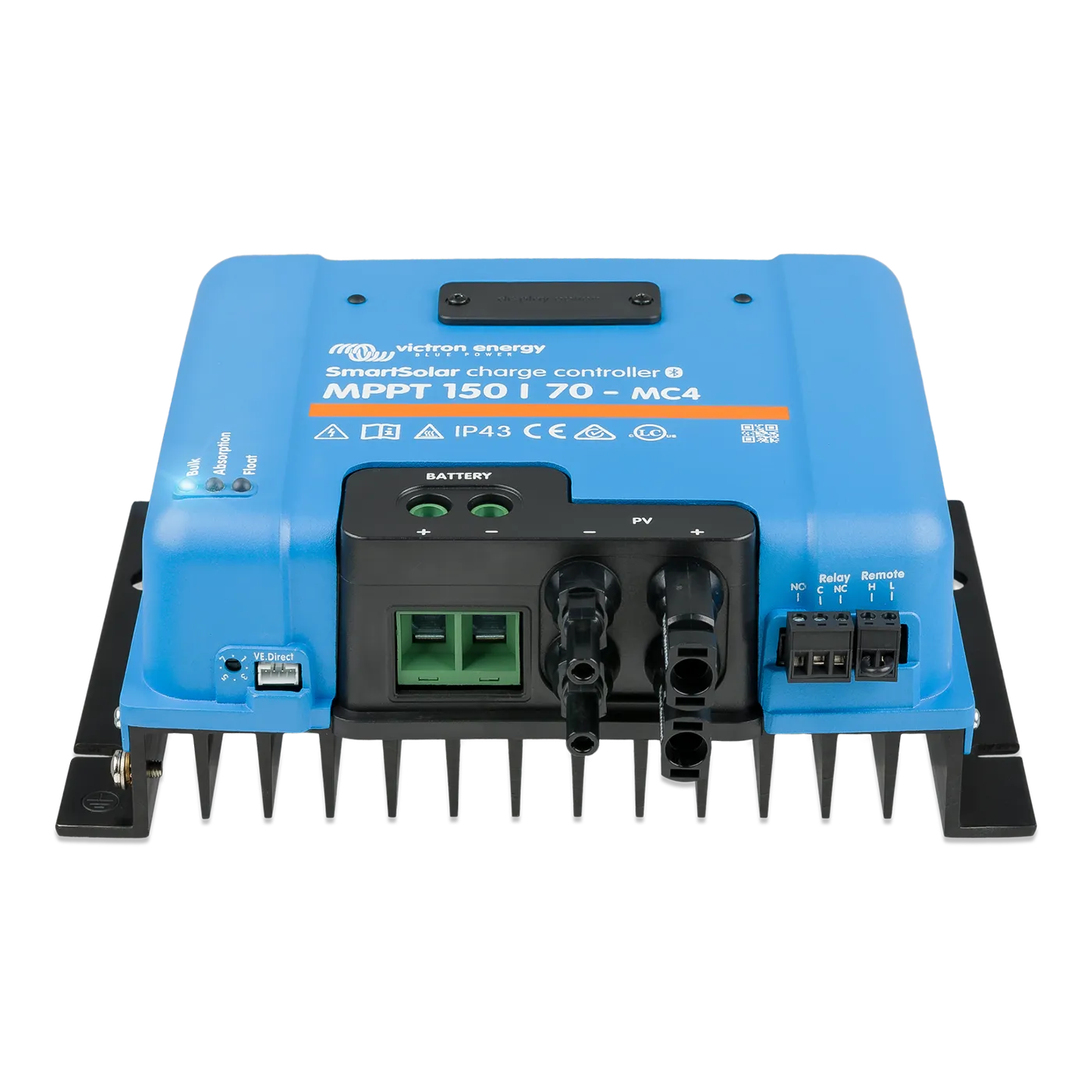
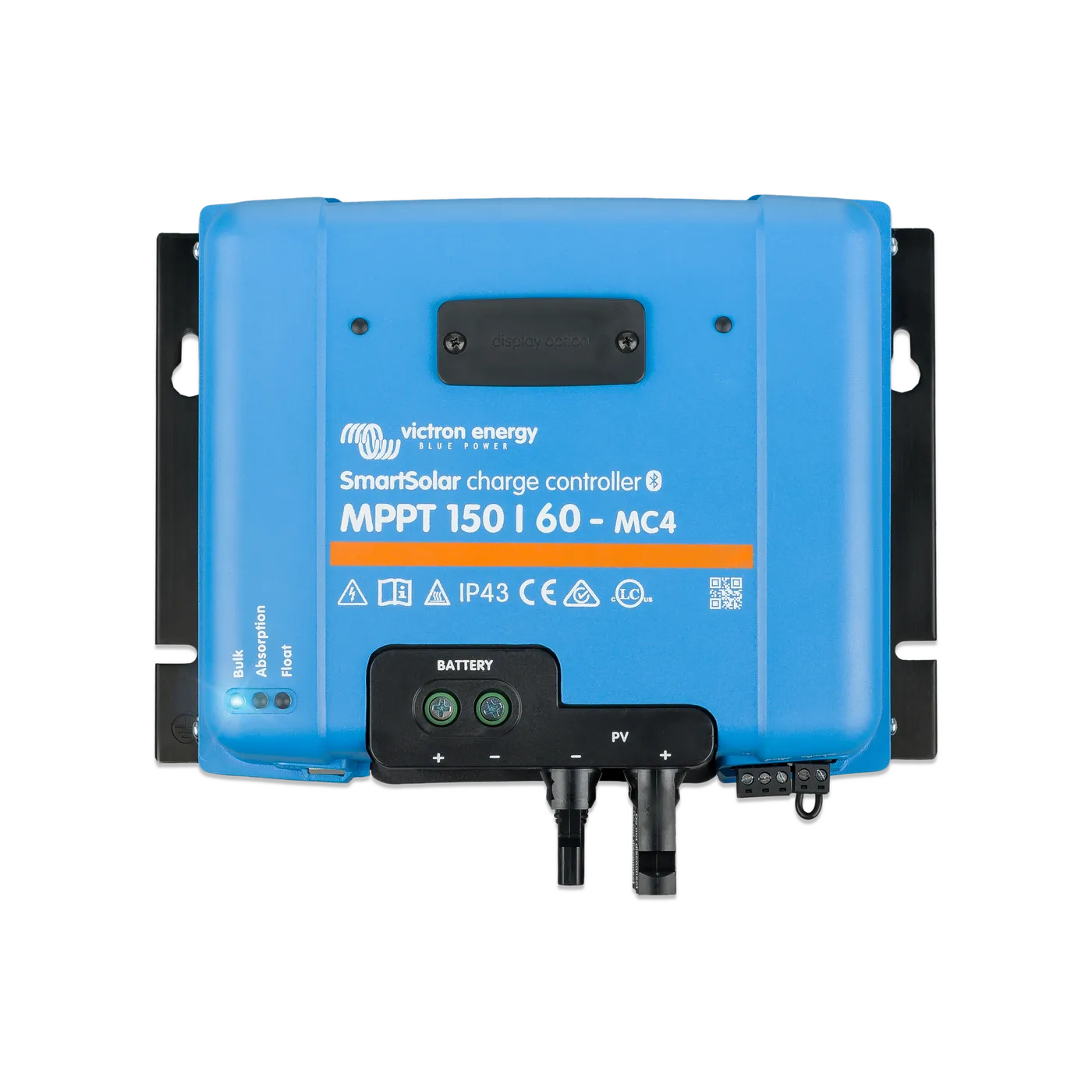
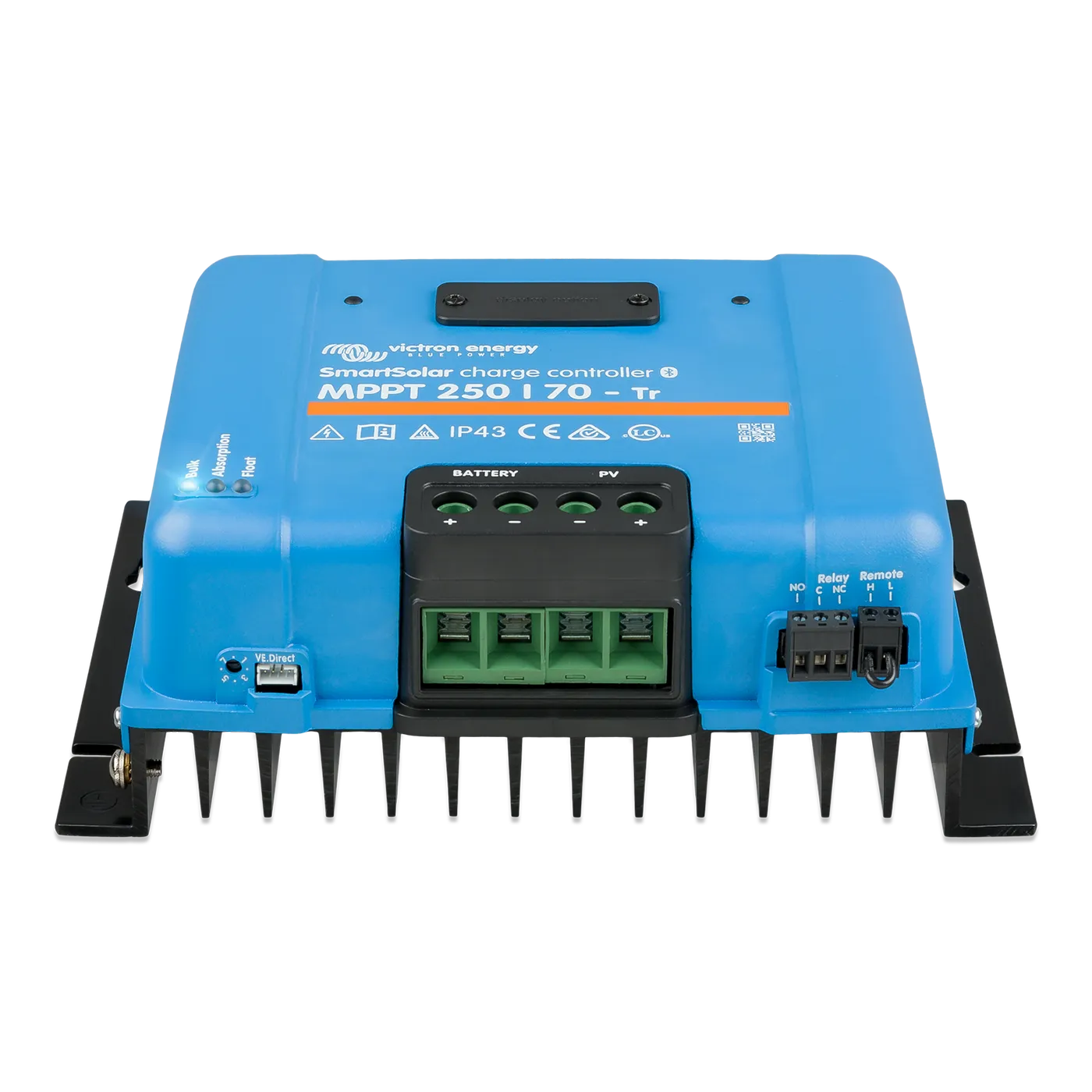
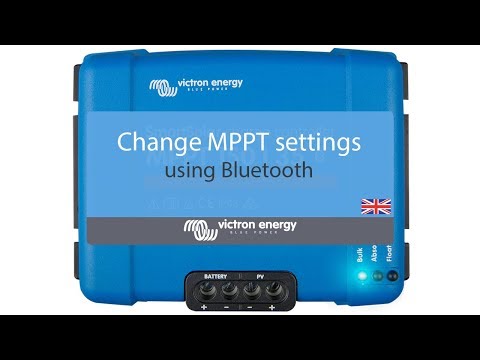
Victron SmartSolar MPPT Charge Controller — 150/60, 150/70, 250/60 & 250/70
Los Angeles — · Atlanta —
Victron's US warehouse count as of —. Indicative, not reserved.
Need more than we have in Seattle? Send us the quantity and we'll email you a secure checkout link. Larger orders going to a business address ship direct from Victron's US warehouse (typically 5–7 business days); everything else we bring into Seattle on our weekly Victron order and ship to you when it lands (typically 1–2 weeks).
 Free shipping over $49
 60-day hassle-free returns
The large-array MPPTs — 60–70 A of charge, 150 V or 250 V of PV
These are the controllers you reach for once your array and battery bank have grown past the mid-range. The SmartSolar 150/60, 150/70, 250/60, and 250/70 push 60–70 A into a 12, 24, 36, or 48 V bank and accept up to 150 V or 250 V of PV. Unlike the smaller SmartSolar models, they add remote on/off terminals and a programmable relay for integrating into a larger system, and up to 10 of them can be synchronised over Bluetooth. The ultrafast MPPT algorithm runs at up to 98% efficiency on the 150-series and up to 99% on the 250-series.
Who the SmartSolar MPPT 150/60–250/70 is built for
- Large off-grid homes — 48 V banks running induction cooktops, air conditioning, and well pumps off a multi-kW array.
- 48 V bluewater and liveaboard yachts — big bimini and arch arrays that have outgrown the mid-range controllers.
- Expedition vehicles and large RVs — rooftop arrays pushing several kW into a 24 V or 48 V house bank.
- Installers building multi-controller systems — remote on/off, a programmable relay, and up to 10 units synchronised over Bluetooth.
How to read the model number
Every Victron SmartSolar MPPT has two numbers in its name:
- First number = max PV input voltage. 150 V on the 150-series, 250 V on the 250-series. The higher ceiling lets you wire more panels in series.
- Second number = max charge current to the battery. 60 A or 70 A.
Combine those with the maximum PV wattage your system voltage supports and you can size the controller. Wesley walks through the full math — including cold-weather Voc adjustments and series/parallel layouts — in our MPPT sizing guide.
Tr or MC4 — which PV connection?
The two versions are electrically identical; they differ only in how the solar wires land:
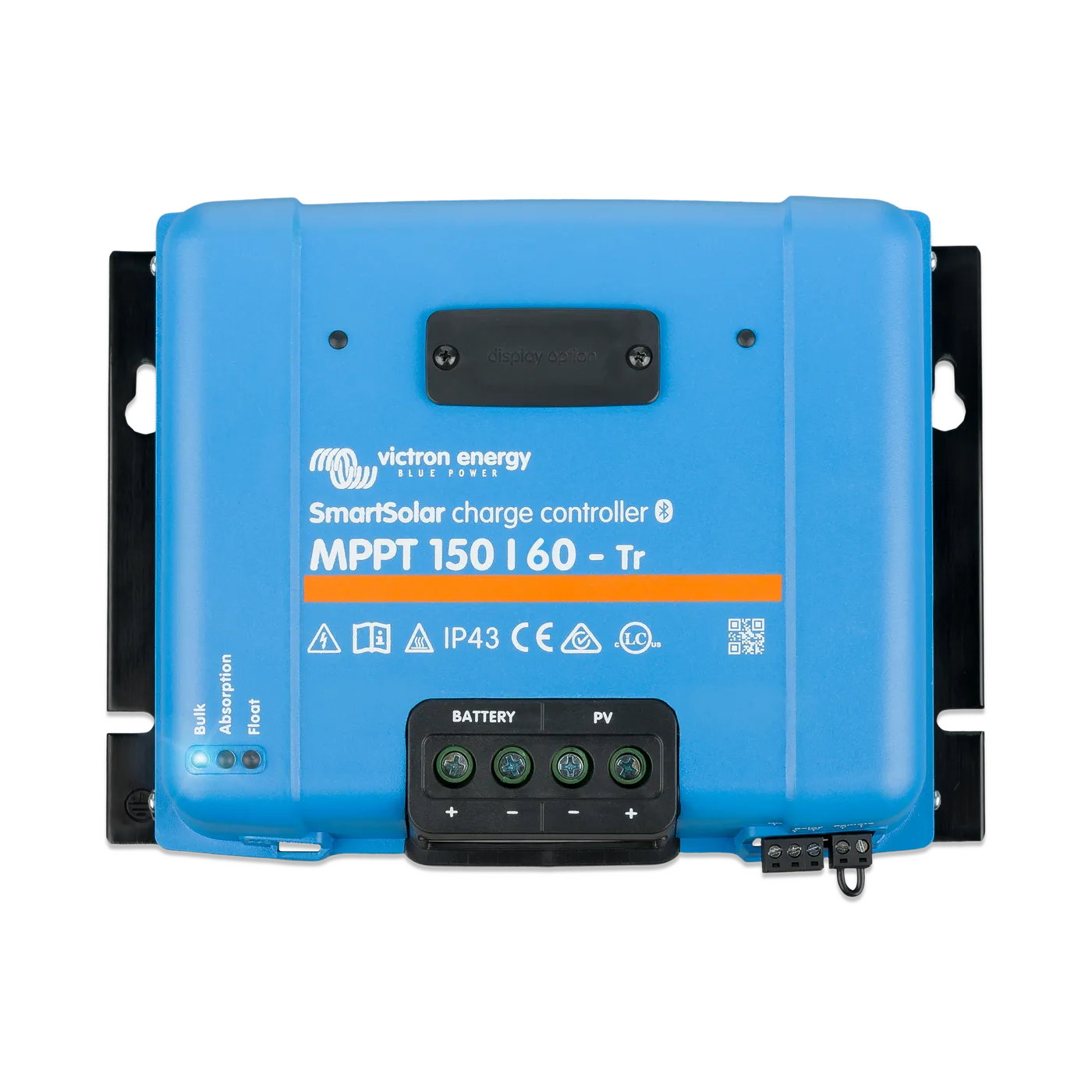
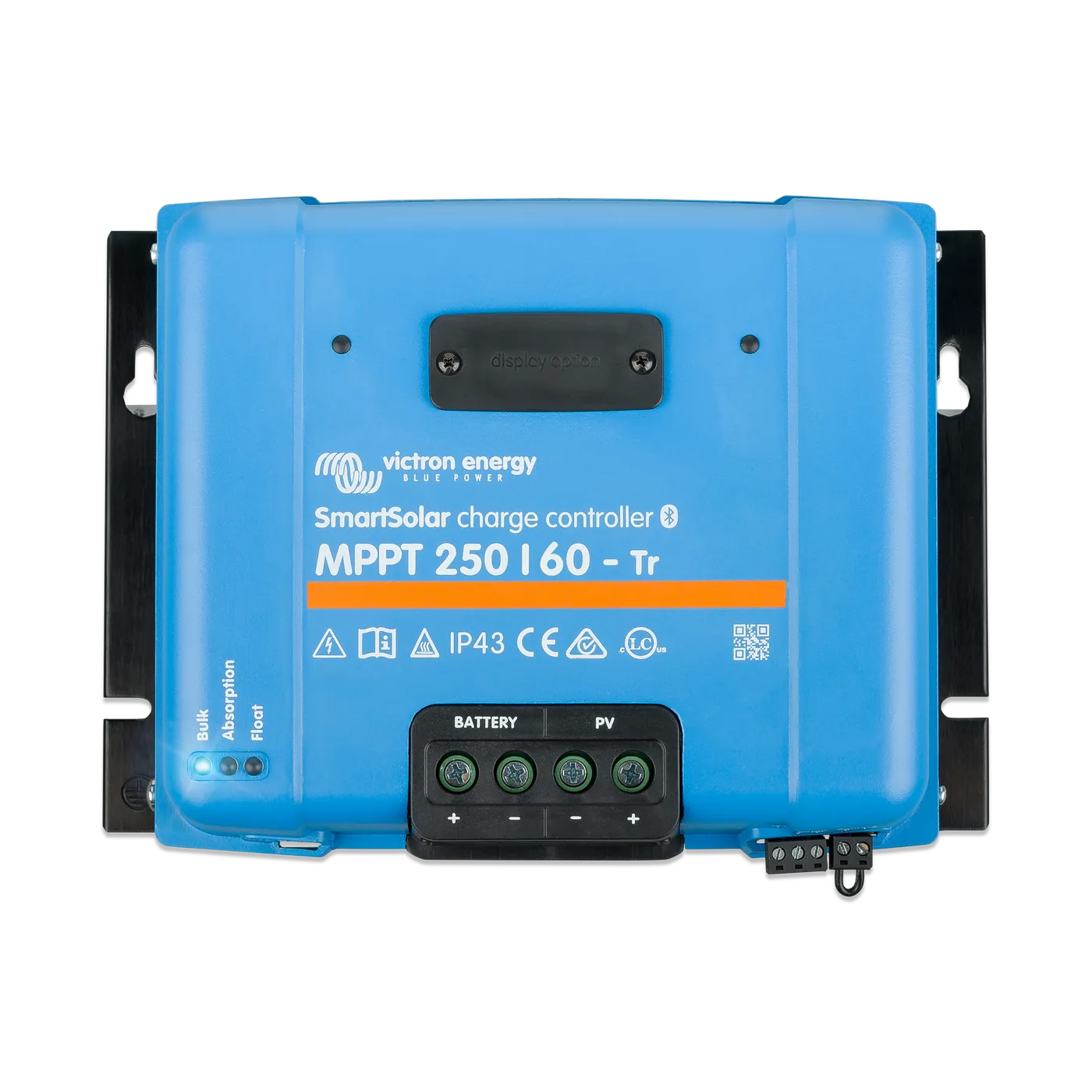
- Tr (screw terminals). One positive and one negative 35 mm² / AWG 2 screw terminal — you bring your own PV wiring (or MC4-to-lug pigtails). Best when you're running a combined home-run from a combiner box.
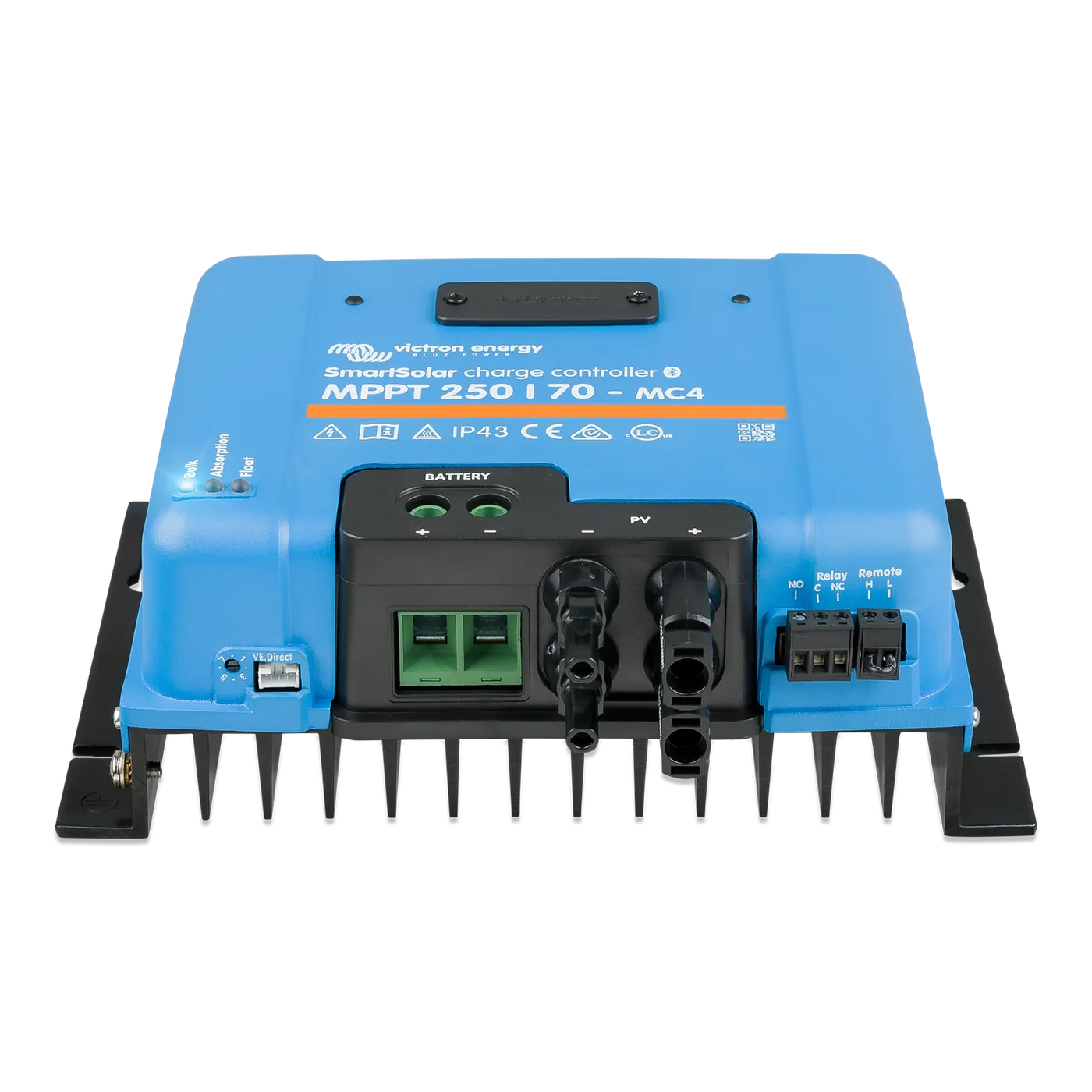
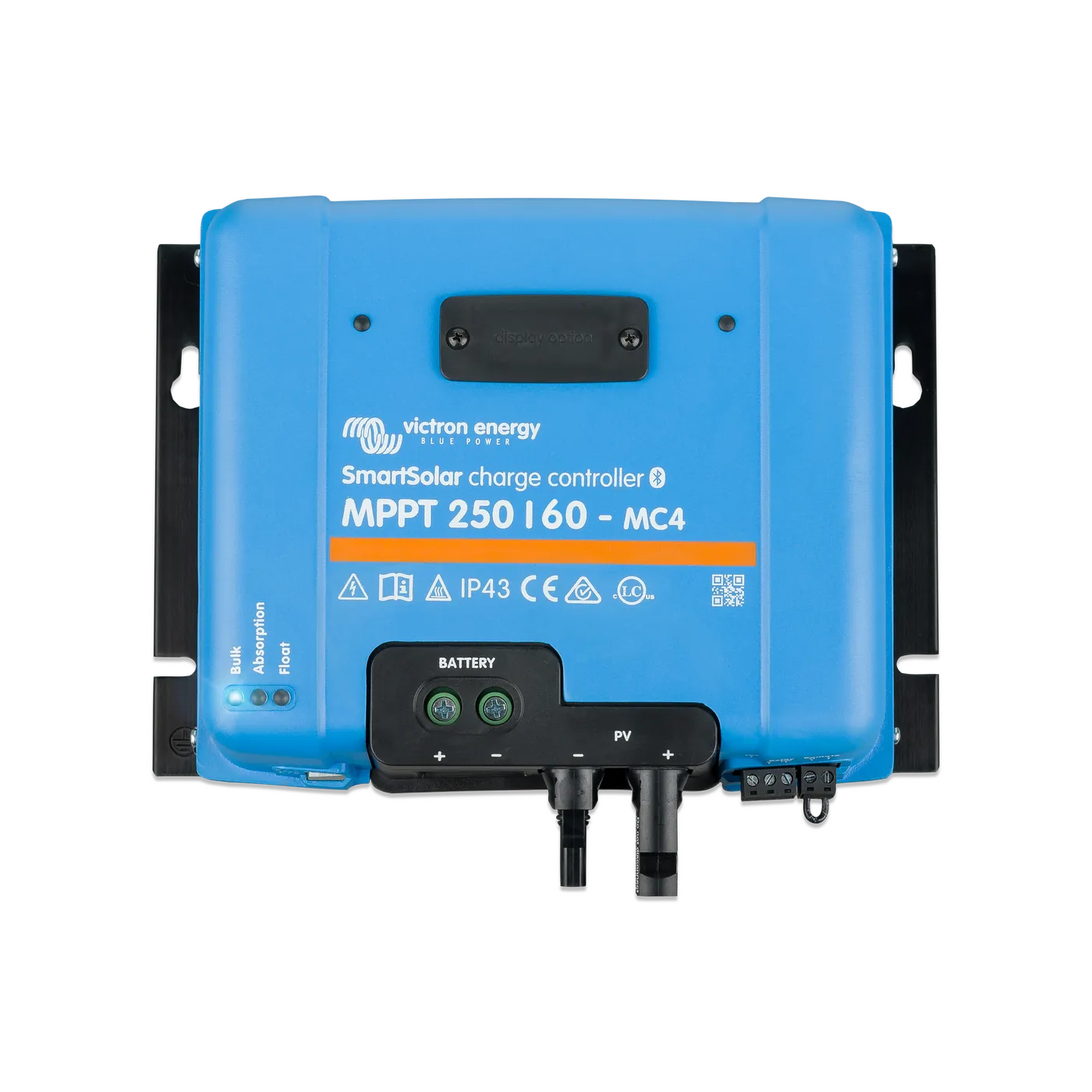
- MC4. Two pairs of MC4 connectors built into the case (max 30 A per connector) so panel strings plug straight in. Best for roof arrays wired directly to the controller.
Choose your controller
| Model | Max PV input | Charge current | Max PV power 12 / 24 / 36 / 48 V | Max PV short-circuit |
|---|---|---|---|---|
| 150/60 | 150 V | 60 A | 860 / 1,720 / 2,580 / 3,440 W | 50 A |
| 150/70 | 150 V | 70 A | 1,000 / 2,000 / 3,000 / 4,000 W | 50 A |
| 250/60 | 250 V | 60 A | 860 / 1,720 / 2,580 / 3,440 W | 35 A |
| 250/70 | 250 V | 70 A | 1,000 / 2,000 / 3,000 / 4,000 W | 35 A |
Not sure which model fits your array? Use our MPPT sizing calculator, or schedule an online consultation with one of our advisors.
150 vs 250 = max PV voltage (longer series strings). 60 vs 70 = charge current. 12 / 24 / 48 V is auto-detected; 36 V is selected manually in VictronConnect. Need 85–100 A or a daisy-chained multi-controller system? Step up to a VE.Can model (150/85, 150/100, 250/85, 250/100).
Why these are the large-system pick
- 60–70 A of charge, 150 V or 250 V of PV. Enough headroom for multi-kW arrays and longer series strings on a 48 V bank.
- Up to 98–99% efficiency. Ultrafast MPPT harvests up to 30% more than a PWM controller and up to 10% more than a slower MPPT.
- Advanced partial-shading detection. When shade splits the array's power curve into multiple peaks, the SmartSolar algorithm locks to the true maximum instead of a local one.
- Remote on/off terminals. A 2-pole connector to tie into a VE.Bus BMS or external control.
- Programmable relay. DPST relay you can set to trip on alarms or events — for generator start signals, load shedding, and more.
- Bluetooth built in + VE.Direct. Configure and monitor from VictronConnect; wire to a Cerbo GX or other GX device for VRM remote access.
- Synchronised parallel charging. Up to 10 units coordinate their charge stages over Bluetooth.
- External sensing. Pair a Smart Battery Sense, BMV-712, or SmartShunt over Bluetooth for temperature- and voltage-compensated charging.
- 0 V recovery. Will start charging a bank pulled to zero volts, and reconnect a Li-ion battery whose BMS has disconnected.
- Passive cooling, 46-day trends. No fan; full month-and-a-half of on-device history in VictronConnect.
Shared specs
| Spec | Detail |
|---|---|
| Battery voltage | 12 / 24 / 48 V auto-select (36 V manual in VictronConnect) |
| Charge voltage (absorption) | 14.4 / 28.8 / 43.2 / 57.6 V default, adjustable |
| Charge voltage (float) | 13.8 / 27.6 / 41.4 / 55.2 V default, adjustable |
| Charge voltage (equalization) | 16.2 / 32.4 / 48.6 / 64.8 V default, adjustable |
| Charge algorithm | Multi-stage adaptive; 8 pre-programmed + fully programmable |
| Maximum efficiency | 98% (150-series) / 99% (250-series) |
| Temperature compensation | -16 mV / -32 mV / -64 mV / °C |
| Self-consumption | Less than 35 mA @ 12 V / 20 mA @ 48 V |
| Operating temperature | -30 to +60 °C (full rated output up to 40 °C) |
| Humidity / altitude | 95% non-condensing; up to 5,000 m (full rated output up to 2,000 m) |
| Protections | PV reverse polarity, output short circuit, over-temperature |
| Communication | Bluetooth (built-in) and VE.Direct |
| Remote on/off | Yes (2-pole connector) |
| Programmable relay | DPST — 240 VAC / 4 A; DC 4 A up to 35 VDC, 1 A up to 60 VDC |
| Parallel operation | Up to 10 units synchronised over Bluetooth |
| PV terminals | 35 mm² / AWG 2 (Tr) or two pairs of MC4 (max 30 A per connector) |
| Battery terminals | 35 mm² / AWG 2 |
| Protection category | IP43 (electronics), IP22 (connection area) |
| Dimensions (H×W×D) | Tr: 185 × 250 × 95 mm · MC4: 215 × 250 × 95 mm |
| Weight | 3 kg (6.6 lb) |
| Certifications | EN/IEC 62109-1, UL 1741, CSA C22.2 |
| Stored trend data | 46 days |
| Warranty | 5 years from date of purchase (extendable to 10 years for a 10% surcharge) |
What's in the box
SmartSolar charge controller, mounting hardware, and the printed quick-start guide. Not included: VE.Direct cable (for GX integration), Smart Battery Sense / BMV-712 / SmartShunt (recommended for accurate state-of-charge), an appropriately sized battery fuse, PV cables, and battery cables sized to the 35 mm² / AWG 2 terminals.
Pair with
- VE.Direct cable — required if you're integrating with a Cerbo GX or other GX device. We stock 0.3 to 10 m versions.
- Battery fuse — size it to the controller's charge current per Victron's installation manual. Email us your model and we'll confirm the right MEGA fuse before you order.
- Smart Battery Sense, BMV-712, or SmartShunt — feed true battery voltage and temperature to the controller over Bluetooth for more accurate charging.
- SmartSolar pluggable display — plugs into the front of the controller for an at-a-glance readout without a phone.
- Cerbo GX MK2 or Ekrano GX — for always-on monitoring, system integration, and remote access via VRM.
- Solar panels — we carry Sol-Go, SunPower, Lumera, and our own Blue Marine panels. Send us your array layout and we'll confirm the controller is sized correctly.
FAQs
Q: Tr or MC4 — which should I order?
They're the same controller electrically. Choose Tr (screw terminals) if your PV comes in as a single combined home-run, or MC4 if you want to plug panel strings straight into the built-in MC4 connectors (max 30 A per connector; use splitters to parallel more strings).
Q: 150 or 250 — which max PV voltage?
Add up the cold-temperature open-circuit voltage (Voc) of your series string. Stay below 145 V to pick the 150-series, or below 245 V for the 250-series. Higher PV voltage lets you run more panels in series and use thinner, cheaper PV cable on long runs.
Q: Can I use this with a lithium battery?
Yes — lithium is one of the eight pre-programmed chemistries. Select the right profile in VictronConnect; for Victron lithium use the Smart Lithium or Lithium NG profile, and for third-party LFP follow the battery maker's charge voltages.
Q: Does it have a load output?
No. The larger SmartSolar models don't have a load output — wire loads to the battery (through a BatteryProtect if you want low-voltage disconnect). They do have remote on/off terminals and a programmable relay for system control.
Q: Does it support 36 V systems?
Yes, but 36 V must be selected manually in VictronConnect — auto-detection covers 12, 24, and 48 V only.
Q: Can I run several in parallel?
Yes — up to 10 units synchronise their charge stages over Bluetooth (or via a GX device).
Q: What's the warranty?
5 years from date of purchase, extendable to 10 years for a 10% surcharge applied before the original term expires. Standard Victron limited warranty applies.
Still sizing your array? Read Wesley's MPPT sizing guide, or email support@bluemarine.com with your panel specs and battery voltage — a tech will confirm the right controller and fuse before you order.
Why buy your SmartSolar MPPT from Blue Marine
- Authorized Victron Energy Distributor — genuine product, fully supported warranty.
- ABYC-certified Advisors — real solar sizing help, not a call center.
- Free US shipping over $49 from our Seattle warehouse.
- 60-day hassle-free returns.
- Local pickup available in Seattle, WA.
- Custom quotes & full system design — request a quote for a complete build.
- Dealer & installer program — apply here for trade pricing.
Manuals & Datasheets
Datasheets
- SmartSolar MPPT 150/60 & 150/70 — Datasheet (EN)
- SmartSolar MPPT 250/60 & 250/70 — Datasheet (EN)
- BlueSolar & SmartSolar MPPT — Overview Datasheet (EN)
Manuals
Guides & resources
- SmartSolar MPPT 150/60 & 150/70-Tr — Enclosure Dimensions
- SmartSolar MPPT 150/60 & 150/70-Tr — Enclosure 3D (PDF)
- BlueSolar & SmartSolar MPPT to 150/100 — UL 1741/CSA C22.2 Cert
- SmartSolar MPPT 150/45–250/100 — UL 1741/CSA C22.2 Certificate
- SmartSolar MPPT 150/45–250/100 — UL 1741/CSA C22.2 (16938-1S)
Need a document you don't see here? Schedule a consultation or email support@bluemarine.com and we'll send it over.
Choose options

About Blue Marine
Nationwide Shipping from Our Warehouse in Seattle
Knowledgeable ABYC Certified advisors, friendly advice and fast shipping.