
Filters
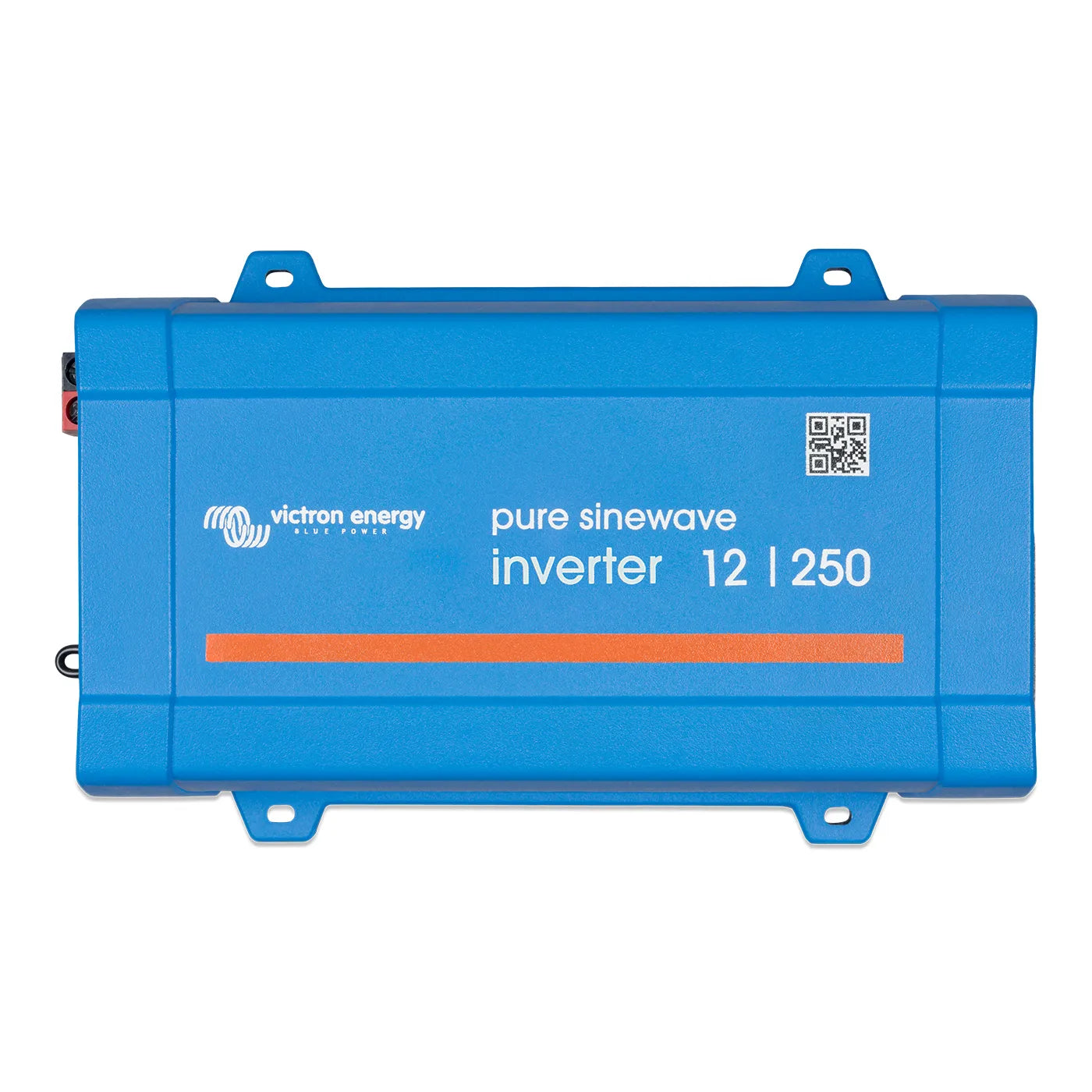
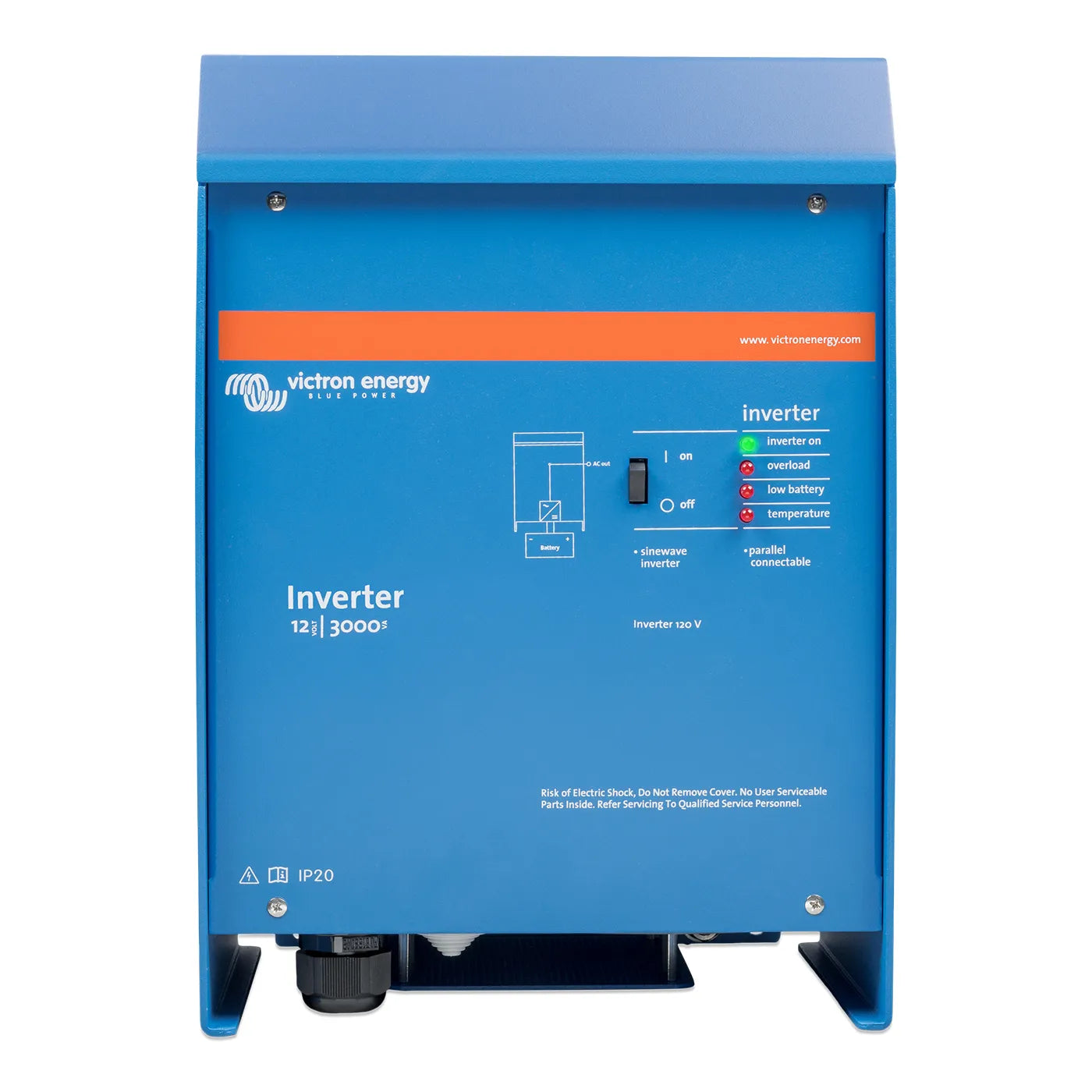
Which inverter fits your setup?
True sine wave AC from your battery bank — from a compact 250 VA for electronics up to 3000 VA for serious loads.
Swipe the table sideways to see every column →
| Inverter | Battery | AC output | Continuous power | Best for | From |
|---|---|---|---|---|---|
| Phoenix VE.Direct (120V) | 12 / 24 / 48V | 120V | 250–1600 VA | Laptops, TVs, tools — everyday US loads | $100.30 USD |
| Phoenix 3000VA (120V, VE.Bus) | 12 / 24V | 120V | 3000 VA | Bigger continuous loads; VE.Bus, parallel-capable | $1,049.95 USD |
| Phoenix VE.Direct (230V) | 12 / 24V | 230V | 250–1600 VA | 230V / European appliances & export | $125.80 USD |
Want shore or generator charging in the same box? Look at the inverter/chargers (Victron MultiPlus) instead — one unit that inverts and charges.
How to choose, in three questions
Power, voltage, and whether you also need charging — answer these and you'll know what to buy.
How much power do you need?
Add up the continuous watts of everything you'll run at once, then leave headroom for motors and compressors that surge on startup. A 250 VA covers a laptop and a TV; 800–1200 VA handles small kitchen gear and tools; 3000 VA runs several larger loads at once. Victron rates these in VA — for simple resistive gear, VA is close to watts.
120V or 230V?
In the US and most of North America you want 120V. The 230V (SCHUKO) versions are for European-spec appliances and export builds. If you're not sure, 120V is almost certainly the one.
Do you also need shore or generator charging?
An inverter only turns battery power into AC. If you also want to charge the bank from shore power or a generator — and switch seamlessly between them — an inverter/charger like the MultiPlus does both in one box. Happy to talk through which path fits your system.
Why buy your inverter from Blue Marine
True Blue Victron distributor
Warranty and support handled by us, not a ticket queue — and we know the whole Victron ecosystem.
ABYC-certified advisors
We size the inverter, battery bank, cabling, and fusing as one system — not just a box on a shelf.
Free US shipping over $49
Fast shipping from Seattle and 60-day returns on non-lithium items.
Real people, real boats
Call (800) 628-6306 Mon–Sat — we spec AC power for real boats and rigs.
Not sure which inverter you need?
Tell us your loads, your battery bank, and whether you dock or run a generator — we'll point you to the right inverter or inverter/charger.
Inverter FAQ
What size inverter do I need?
Add up the continuous watts of the gear you'll run at the same time, then allow extra for surge — motors, pumps, and compressors briefly draw far more on startup. As a rough guide, 250–500 VA suits electronics, 800–1600 VA covers small appliances and tools, and 3000 VA handles several larger loads at once.
Pure sine or modified sine wave — does it matter?
Every Phoenix inverter we carry is true (pure) sine wave. That matters for sensitive electronics, motors, microwaves, and chargers, which can run hot, buzz, or misbehave on the cheaper modified-sine output. For a boat or RV full of electronics, true sine is the safe choice.
Inverter or inverter/charger — which do I want?
A plain inverter turns battery power into AC. An inverter/charger (like the Victron MultiPlus) also charges your bank from shore power or a generator and transfers between sources automatically. If you dock or run a genset, the combined unit is usually worth it; if you only ever run off the battery, a Phoenix inverter is simpler and cheaper.
12V, 24V, or 48V — which input?
Match the inverter to your battery bank voltage. Smaller systems are usually 12V; larger banks move to 24V or 48V so the same power flows at lower current, which means thinner, cheaper cabling and less loss. The 120V Phoenix line offers 12V, 24V, and 48V models.
Will it run a microwave or coffee maker?
Often yes, if you size for the surge. A small microwave or coffee maker can momentarily pull well over its rated watts, so a 1200–1600 VA inverter is a common starting point for one at a time, and 3000 VA for more headroom. Check the appliance's startup draw, not just its running watts.
How should an inverter be wired and fused?
Inverters pull serious current, so they want short, correctly-sized battery cables and a fuse close to the battery. The right cable gauge and fuse depend on the model and run length — a common approach is to follow the manufacturer's and ABYC guidance, and our advisors are glad to spec it for your install.
Can I monitor the inverter or connect it to a GX display?
Yes. The VE.Direct models report to VictronConnect over Bluetooth (with a dongle) or to a Cerbo GX; the 3000VA VE.Bus model networks into a GX system for full monitoring and control. You can see load, battery voltage, and status from your phone or panel.