
Filters
Which battery monitor fits your setup?
A true fuel gauge for your bank — exact amps in and out and real state of charge, on your phone or a dedicated display.
Swipe the table sideways to see every column →
| Monitor | Display | Connectivity | Shunt / range | Best for | From |
|---|---|---|---|---|---|
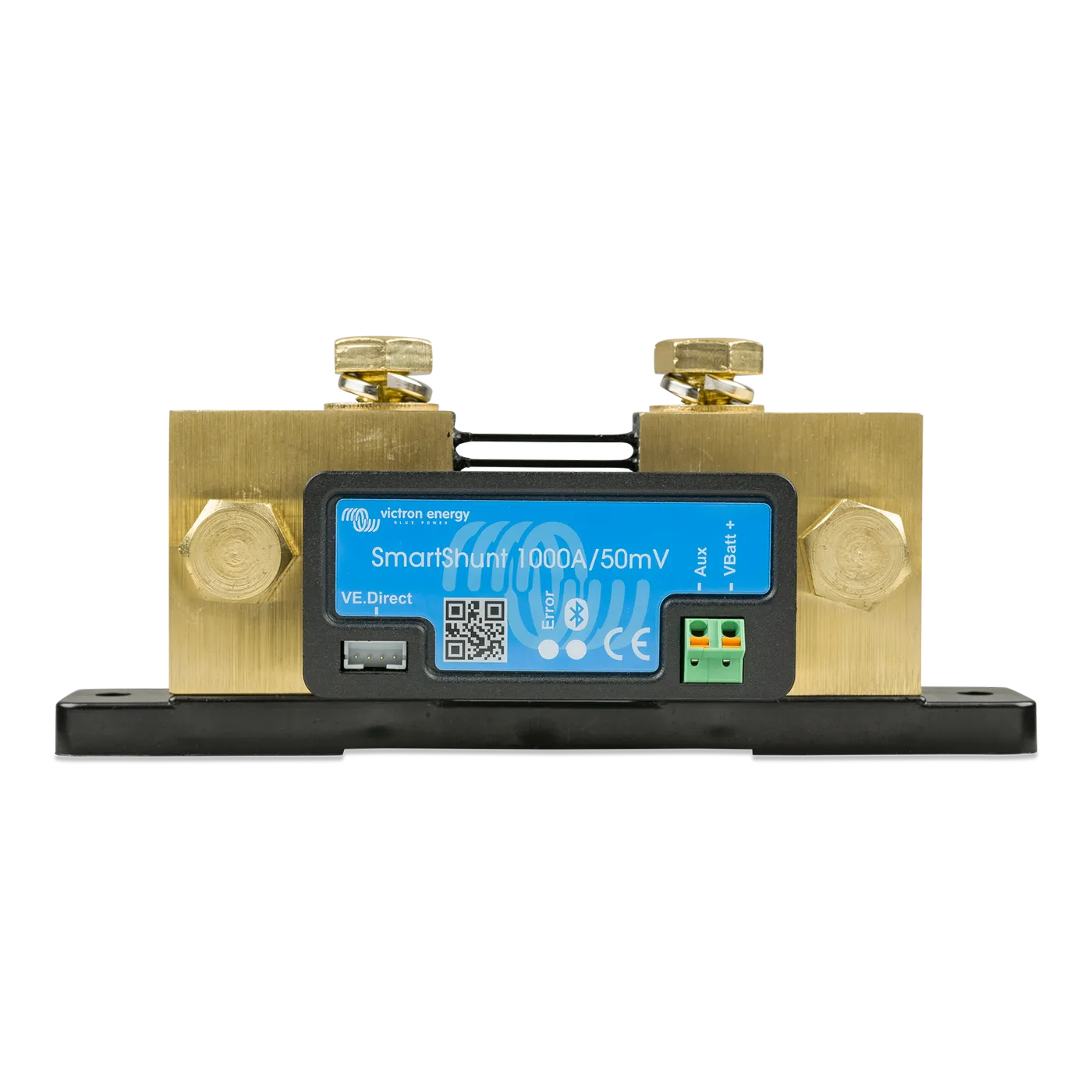
| Victron SmartShunt | None (phone) | Bluetooth | 300–2000A, 50mV (IP65 option) | Phone-only monitoring and a tuck-away install | $85.85 USD |
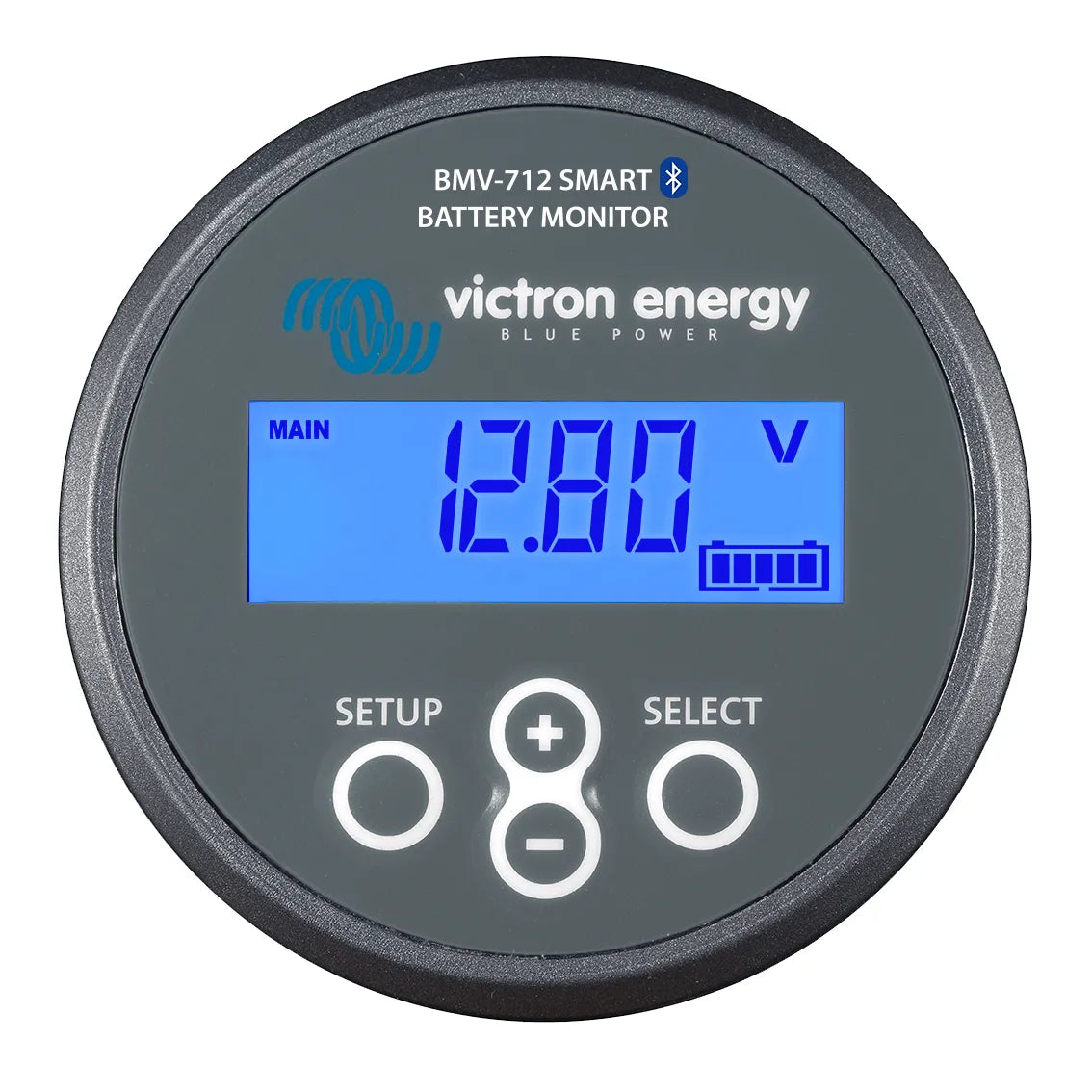
| Victron BMV Series | Round panel gauge | Bluetooth (712 / 710H Smart) | To 95V; 700H / 710H to 385V | A dedicated gauge at the helm or panel | $110.50 USD |
Want it on one screen with your inverter, solar, and tanks? Pair either with a Cerbo GX or display over VE.Direct.
How to choose, in three questions
Phone or gauge, shunt size, and system voltage — answer these and you'll know what to buy.
A phone, or a dedicated gauge?
Both read the same data — the difference is how you see it. The SmartShunt has no display and reports to your phone over Bluetooth (and to a GX/VRM), so it hides away near the battery. The BMV adds a round panel gauge at the helm or electrical panel; the 712 and 710H Smart models add Bluetooth on top.
What shunt size do you need?
Size the shunt to the most current your system will ever pull or push at once — including the inverter. A 500A shunt covers most house systems; big inverters and large banks may want 1000A or 2000A. The SmartShunt comes in 300A through 2000A; the BMV ships with a 500A shunt.
Is it a high-voltage system?
Standard BMV and SmartShunt monitors handle up to about 95V — fine for 12/24/48V banks. For traction packs or high-voltage strings, the BMV-700H and 710H read up to 385V. If you're unsure where your system lands, we'll confirm it.
Why buy battery monitors from Blue Marine
True Blue Victron distributor
Warranty and setup support handled by us, not a ticket queue — and we configure these every week.
ABYC-certified advisors
We place the shunt correctly — every load and charge source through it — so your state-of-charge reads true.
Free US shipping over $49
Fast shipping from Seattle and 60-day returns on non-lithium items.
Real people, real boats
Call (800) 628-6306 Mon–Sat — we wire battery monitoring on real boats and rigs.
Not sure which monitor you need?
Tell us your bank, your biggest loads, and whether you want a gauge or just your phone — we'll spec the monitor and the shunt size.
Battery monitor FAQ
What does a battery monitor (shunt) actually do?
It measures every amp flowing in and out of your bank through a shunt, then tracks true state of charge — like a fuel gauge for your batteries. That's far more accurate than guessing from voltage alone, which sags under load and rises at rest. You see charge percentage, amps, volts, and time remaining.
SmartShunt or BMV — which should I get?
Choose the SmartShunt if you're happy reading your phone (or a GX screen) and want a clean, hidden install. Choose a BMV if you want a dedicated round gauge mounted where you can glance at it — the BMV-712 Smart adds Bluetooth so you get both.
What shunt amperage do I need?
Match it to the highest current your system will see at once, inverter included. A 500A shunt suits most house banks; large inverters and big lithium banks justify 1000A or 2000A. Undersizing risks clipping readings during peak loads, so when in doubt, size up.
Which models have Bluetooth?
Every SmartShunt has Bluetooth. In the BMV line, the 712 Smart and 710H Smart have it built in; the BMV-700, 702, and 700H do not — they rely on the panel display (or a VE.Direct connection to a GX).
Can it connect to my Cerbo GX or VRM?
Yes — over VE.Direct, the monitor feeds your battery data into a Cerbo or other GX device and the VRM cloud, so it shows up alongside the rest of your system on one screen and from anywhere.
Does it work with lithium (LiFePO4)?
Yes. The monitor counts amp-hours regardless of chemistry, and you set the battery capacity and a few parameters so the state-of-charge reads accurately for lithium, AGM, or gel.
Where does the shunt get installed?
On the battery's negative, with every load and charge source connected on the system side of the shunt — that's how it sees all the current. Mount it close to the bank, keep the small sense wires tidy, and only the main negative goes through the big studs.